Blog

  • The Camera Isn’t the Business: An Uncomfortable Conversation About Photography in Central Wisconsin

    Let’s have a conversation that probably isn’t going to make me very popular in certain circles.

    Central Wisconsin has a photography problem.

    And no, I’m not talking about a lack of talented photographers. We have some genuinely incredible artists in this area. People who understand light, composition, storytelling, posing, timing, and the technical side of their craft. People who have spent years learning, practicing, investing, failing, improving, and developing an eye that simply cannot be replicated by purchasing a piece of equipment.

    I’m talking about the oversaturation of the market. The seemingly endless supply of people who buy a camera, create a Facebook page, announce that they’re officially in the photography business, and immediately begin competing for the same clients.

    And somewhere along the way, we’ve started confusing owning a camera with being a photographer, and being a photographer with being qualified to run a photography business.

    Those are three very different things.

    Let’s start with some honesty.

    I’m a hobbyist photographer myself. I’ve taken photography classes, invested time in learning, and dabbled in professional photography on a limited basis. I know enough to appreciate how much I still have to learn. I also know that enjoying photography, being good at photography, and building a sustainable business around photography are three entirely different accomplishments.

    I’m not going to sit here and pretend I’m the gold standard. I’m not. I have no interest in claiming that I’m better than everyone else or that my work deserves some special place in the market.

    But because I have enough experience to understand that this craft involves more than pressing a shutter button, I can recognize the difference between someone who has developed a skill and someone who has simply decided to monetize a hobby.

    And I think it’s time we stopped pretending those differences don’t exist.

    Not everyone needs to become a professional.

    Some people are incredibly talented photographers. Some are learning. Some are hobbyists who take beautiful pictures of their families, their pets, their vacations, and the world around them.

    All of those things are perfectly fine.

    You do not need to turn every hobby into a side hustle. You do not need to make money from every creative interest. You can love photography without trying to establish a business, build a brand, book clients, and compete with people who have made this their livelihood.

    There is absolutely nothing wrong with being a hobbyist.

    In fact, I think there’s something refreshing about enjoying a craft without feeling compelled to sell it.

    For me, that’s exactly the point. I never wanted photography to become my career because I know what happens when something you love becomes something you’re obligated to do. Suddenly, there’s pressure to book clients, meet deadlines, keep up with trends, market yourself constantly, and produce work that other people are willing to pay for. Something that once brought you joy can quickly become another source of stress. I want photography to remain my creative outlet, something I do because I want to, not because I have to. I want to be able to pick up my camera because something catches my eye, experiment with a new technique, or spend time capturing something beautiful without wondering whether it will generate a booking or bring in a dollar.

    If I had to describe my personal photography “brand,” I’d call myself the volunteer photographer. As a kid, I dreamed of shooting professional sports—NFL, MLB, NBA, maybe even working for ESPN someday. Breaking into that world is incredibly difficult, but I found my own way to live a little piece of that dream by photographing local sports: junior high, high school, and youth athletics. Most of the time, I do it free of charge because I love capturing these athletes, their hard work, and the moments their families will cherish. I’ve also photographed senior portraits and weddings, but always on my terms, when it feels right for me. My clients come exclusively through word of mouth and referrals. I don’t advertise to the public, chase bookings, or actively market myself as a photography business. I take photographs because I love it, I share my talent when I choose to, and I want to keep that joy without turning it into a job. That’s my brand, and I’m perfectly happy with it.

    Honestly, probably 85% of my photographs never get shared publicly. Not every photograph needs an audience, a like, a comment, or a price tag to have value. Sometimes I take a picture simply because I love the way the light hits something, because I want to preserve a moment, or because I see beauty in something other people might walk right past. Those photographs can mean something to me without ever appearing on Facebook or becoming part of a portfolio. I don’t need to turn every creative moment into content, and I don’t need public validation to enjoy what I’ve created. There’s a certain freedom in that, and I think we’ve lost a little of it in a world where everyone is encouraged to monetize every hobby, build a personal brand, and turn their interests into side hustles.

    Not everything you’re good at has to become a business. Not everything you love has to make you money. And not every passion needs to be put to work. Sometimes, it’s enough to simply love doing something.

    The problem begins when someone assumes that because they enjoy taking pictures, other people should automatically be willing to pay them to do it.

    Enjoyment is not expertise. Enthusiasm is not experience. And a Facebook business page is not a qualification.

    The race to the bottom is not a business strategy.

    One of the most frustrating things about an oversaturated market is watching people attempt to compete almost exclusively on price.

    Someone charges $300 for a session. Someone else offers it for $200. Another person advertises a $75 mini-session. Before long, someone is practically giving away an entire session because they believe being cheaper will help them corner the market.

    Here’s the uncomfortable truth: being the cheapest photographer in town does not make you the best photographer in town. It makes you the cheapest photographer in town.

    Those are not interchangeable titles.

    Low prices can attract clients, but they don’t automatically create a sustainable business. Equipment costs money. Editing software costs money. Education costs money. Insurance, equipment maintenance, storage, travel, taxes, marketing, and the hours spent communicating with clients and editing galleries all cost money.

    And time? Time is the one thing you cannot manufacture more of.

    If you’re charging so little that you resent the time you spend on every session, you’re not building a sustainable business. You’re building yourself a job that may eventually leave you exhausted and underpaid.

    There is a difference between offering an introductory rate while building a portfolio and continually undercutting everyone else because you have no other competitive advantage.

    If the only reason someone should hire you is that you’re cheaper than the next person, what happens when the next person lowers their prices?

    You lower yours again?

    Congratulations. You’ve entered a race in which the finish line is financial burnout.

    The goal should not be to make photography as inexpensive as possible. The goal should be to offer something worth paying for.

    You cannot build a business by copying everyone else’s business.

    Look around Central Wisconsin.

    Family sessions. Senior portraits. Newborn photography. Weddings. Engagements. Couples. Maternity sessions. Fall mini-sessions. Christmas mini-sessions. Sunflower fields. Tall grass at golden hour. Kids sitting in fields. Couples standing in fields. Families walking through fields.

    Apparently, we have enough fields in this area to sustain an entire industry.

    And to be clear, there is nothing inherently wrong with any of these styles. Some photographers have mastered them. Some clients genuinely love them. Trends exist for a reason, and familiar settings can produce beautiful images.

    But when everyone offers essentially the same thing, in the same locations, with the same poses, at similar times of year, what exactly makes one business different from the next?

    A preset? A logo? A catchy business name? A slightly different font on a price list?

    If your entire business model consists of replicating what appears to be working for someone else, you haven’t necessarily identified a market opportunity. You may simply be adding another nearly identical option to an already crowded market.

    And here’s another uncomfortable reality: the photographer who inspired your business model may have spent a decade developing the skills, reputation, client relationships, and artistic vision that you are attempting to reproduce in a few months.

    You can imitate a style. You cannot instantly duplicate the experience behind it.

    A business needs an identity. It needs a point of view. It needs a reason for clients to choose you beyond your price or your availability.

    What do you do differently? What do you see that other people might miss? What experience do you provide? What makes your work recognizable as yours?

    If you cannot answer those questions, you may need to spend more time developing your craft and less time developing your marketing graphics.

    Editing can enhance a photograph. It cannot rescue everything.

    Let’s talk about editing.

    Editing is a legitimate part of photography. Color grading, exposure adjustments, retouching, and creative post-processing can help a photographer bring a vision to life. There are talented artists who use extensive editing deliberately and beautifully.

    This isn’t an argument against editing.

    It’s an argument against confusing editing with photographic skill.

    You can smooth skin, change colors, blur backgrounds, add dramatic skies, apply trendy presets, and transform an image into something that looks nothing like what came out of the camera.

    But if the original image has poor composition, missed focus, unflattering light, awkward posing, or a moment that was never captured properly, editing has limitations.

    Sometimes the editing becomes so heavy that the photograph stops looking like the person who was photographed. Skin looks plastic. Colors look unnatural. Faces lose their texture. Every image has the same exaggerated tone because the photographer has applied the same treatment to every situation.

    A heavily edited image can be visually striking. It can also be a distraction from technical weaknesses.

    The best photographers understand that editing is a tool, not a substitute for understanding light, exposure, composition, and human expression.

    You should not need to perform digital miracles on every image to convince people that you can take a good photograph.

    Learn to create a strong image in the first place. Your editing skills will become even more valuable when they’re enhancing good work instead of trying to compensate for preventable mistakes.

    A good photograph is not the same thing as a successful business.

    This is where I think the conversation gets especially important.

    Even if you’re genuinely talented, talent alone will not guarantee a successful photography business.

    Running a business requires far more than artistic ability. You need communication skills. Reliability. Organization. Financial literacy. Marketing. Customer service. Contracts. Scheduling. Backup systems. The ability to manage expectations. The willingness to handle difficult conversations professionally.

    You need to understand what it actually costs to operate your business and whether the money you’re bringing in supports those costs.

    You need to deliver what you promise, when you promise it.

    You need to know how to handle a disappointed client without becoming defensive or turning social media into a courtroom.

    You need to understand that clients are not simply purchasing digital files. They’re trusting you with memories, milestones, important occasions, and sometimes moments they will never get back.

    A wedding cannot be rescheduled because you forgot to charge your batteries. A child’s expression cannot always be recreated because you missed the moment. A newborn will not remain a newborn while you figure out your camera settings.

    Professionalism matters because the stakes matter.

    And if you’re charging people for a professional service, you owe them more than good intentions and a promise that you’re still learning.

    Learning is admirable. Continuing to learn is essential. But clients should not unknowingly be paying the price for a photographer’s lack of preparation.

    Social media has made it easy to look established.

    Today, anyone can create a business page, purchase a website template, design a logo, post a handful of edited images, and announce that they’re booking clients.

    From the outside, it can look like a legitimate business.

    But a polished social media presence does not tell you whether someone understands exposure. It doesn’t tell you whether they can work in difficult lighting, consistently produce a full gallery of quality images, manage a large group, handle a wedding timeline, or deliver professional results under pressure.

    It doesn’t tell you whether their business is profitable, whether they have the necessary equipment backups, or whether they can maintain quality when the circumstances aren’t ideal.

    Social media rewards visibility. It rewards consistency, engagement, trends, and sometimes simply being the loudest person in the room.

    It does not automatically reward the most technically skilled photographer.

    That creates a difficult environment for experienced photographers who are quietly doing excellent work while competing with people who are exceptionally good at marketing themselves.

    Marketing matters. There’s no question about that.

    But we need to stop assuming that popularity is proof of quality or that a busy booking calendar is proof of artistic excellence.

    Sometimes it is. Sometimes it isn’t.

    The number of followers you have does not determine the quality of your work. Neither does the number of comments under your latest mini-session announcement.

    And the number of photographers advertising in Central Wisconsin does not mean there is an endless supply of clients willing to pay for their services.

    Let’s give credit where credit is due.

    Now, after all of that criticism, I want to talk about something equally important: recognizing the photographers who remind me why this craft is worth celebrating in the first place.

    Because this isn’t about tearing down talented people. It’s about recognizing the difference between simply taking pictures and having an artistic eye, a distinctive approach, and the ability to capture something that makes another person stop and feel something.

    There are photographers in our area whose work I genuinely admire. Some have been doing this for years. Their work reminds me that photography isn’t just about the camera, the equipment, the editing software, or the latest trend. It’s about what the person behind the camera sees that the rest of us might miss.

    John Hartman of Contemporary Photography is one of those photographers.

    John took my senior portraits 30 years ago. Think about that for a moment. Three decades later, he’s still creating, still working, and still producing images that make people stop and appreciate his talent. He’s fantastic with family portraits, headshots, and those high school sports posters that capture athletes in such a powerful way.

    But my favorite work of his is his light painting photography.

    There’s something about the way he uses light to transform an ordinary subject into something extraordinary that I absolutely love. His photographs of vintage cars at the Iola Car Show are wonderful examples of how a photographer can take something familiar and make you see it differently. And then there’s a recent photograph of tomatoes he shared that brought me an absurd amount of joy.

    Yes, tomatoes.

    Not a bride in a flowing dress. Not a perfectly posed family. Not a dramatic sunset or an exotic landscape. Tomatoes.

    And that’s precisely my point.

    John Hartman (photographer)

    That image reminded me that photography doesn’t always need a grand occasion or a paying client to be meaningful. Sometimes the beauty is in the ordinary, and the magic comes from the person who recognizes it. John has built a body of work that goes far beyond checking boxes on a session price list. His light painting is a reminder that photography can be creative, experimental, and genuinely joyful.

    Ashley Herek Photography is another photographer whose work I deeply admire, especially when it comes to families.

    Ashley has a gift for posing people in ways that feel thoughtful and natural while still bringing out their individual personalities. She knows how to arrange a family, find the right moment, and create an image that feels like more than a collection of people standing together for a photograph.

    She has a way of freezing time.

    As parents, we all know how quickly childhood passes. The little faces change. Personalities grow and evolve. The years we think will last forever somehow disappear in the space between school pictures, birthdays, and the next stage of life.

    A great family photograph gives you a little piece of that time back.

    Ashley took a photograph of my boys that I admire daily. Not occasionally. Daily. That image means something to me because it captures my children in a way I can return to over and over again. It’s a reminder of who they are, their unique personalities, and of how precious these fleeting years really are.
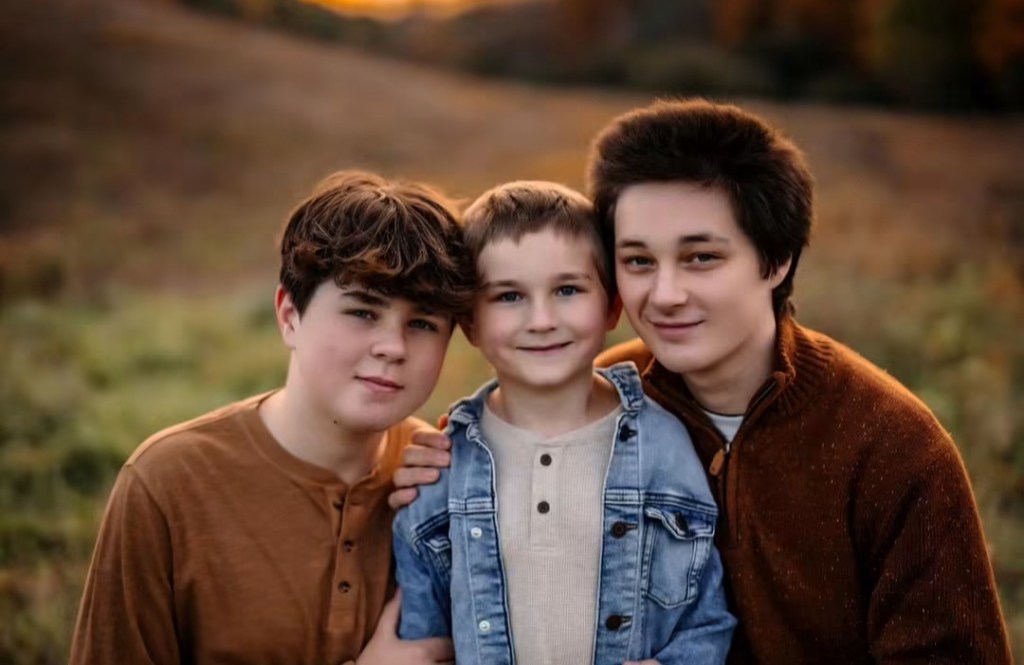
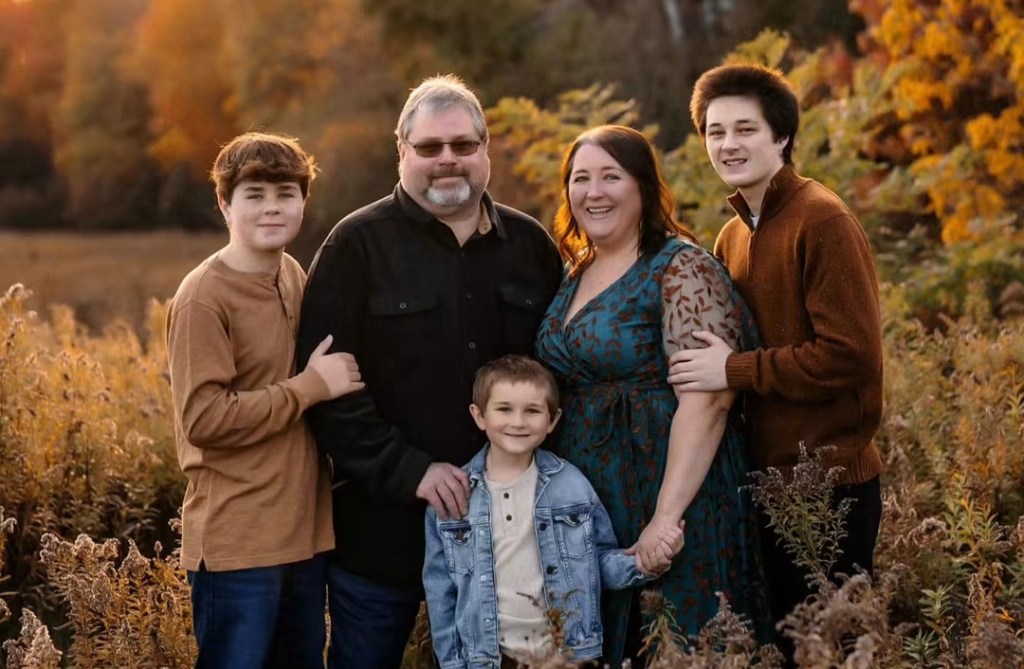
    Ashley Herek Photography
    Ashley captured our family portrait in 2023 and it hangs on my wall to this day. She has a talent for arranging people, suggesting color palettes, and getting each persality to shine through the image.

    That is the kind of work that reminds me why professional photography has value. It’s not just about getting everyone to look at the camera. It’s about capturing something you will want to hold on to long after that moment has passed.

    And then there’s Northbound Photography, whose specialization in Catholic wedding photography speaks directly to my heart.

    As a Catholic, I have a particular appreciation for the beauty, reverence, and meaning woven into the sacrament of marriage. A Catholic wedding is not simply a pretty venue, a dress, flowers, and a celebration. It is a sacred commitment, a sacrament, a moment filled with faith, tradition, and promises made before God.

    I don’t know the couple in this photograph, but I do recognize Father Matthew, standing on the far right, who served as associate pastor at my parish. The photographer captured his joyful smile so beautifully—a smile I had the pleasure of seeing every week at Mass. Seeing it in this photograph brought that familiar joy right back to me and made me smile, too. It’s a wonderful reminder that a talented photographer doesn’t just capture what someone looks like; they capture a little piece of who that person is.
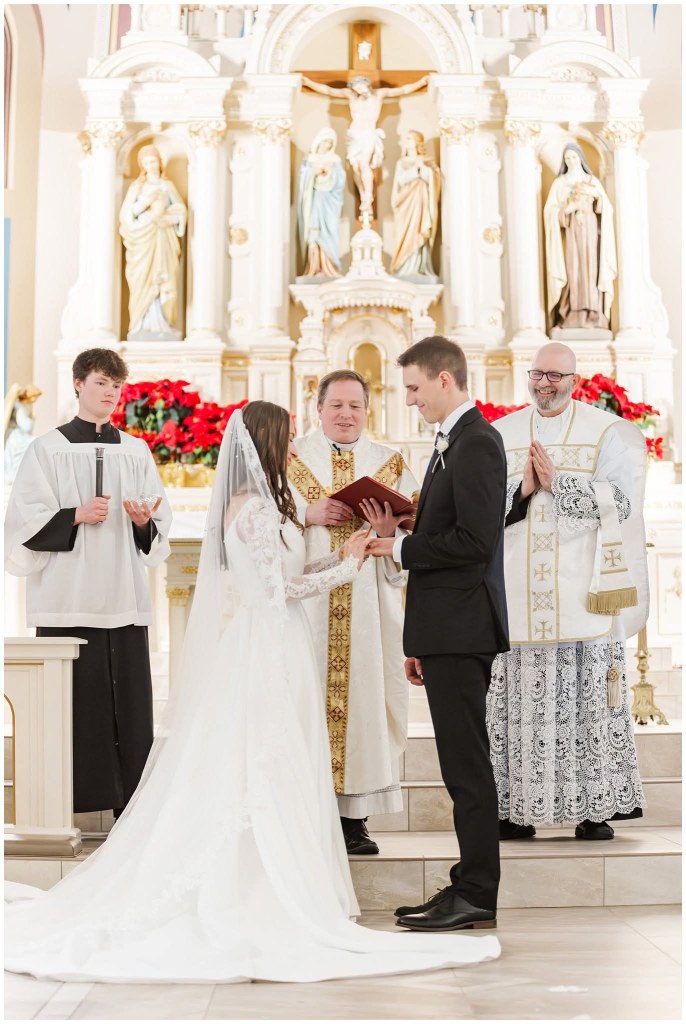
    Northbound Photography

    The images Northbound Photography creates capture a world that means so much to me. I admire the work because it reflects more than the visual beauty of a wedding day. It honors the spiritual significance of the occasion.

    That kind of specialization matters. It demonstrates an understanding of the subject, the traditions, and the moments that carry deeper meaning for the people being photographed.

    These three photographers have different strengths, different approaches, and different subjects that inspire them. But they share something I think is essential: they remind me that photography can be more than a product to sell. It can be an art form, a way to preserve memories, a means of expressing faith, and a way to reveal beauty in places people might not expect to find it.

    That’s what I want to celebrate.

    I’m not suggesting these are the only talented photographers in Central Wisconsin. They are simply three whose work has personally resonated with me, each for different reasons. There are others doing wonderful work, too.

    And praising the photographers I admire does not require me to pretend the market isn’t crowded or that every business offering photography is operating at the same level.

    We can appreciate talent while still having an honest conversation about standards.

    In fact, I think we should.

    The market does not owe you a living.

    This may be the part people dislike the most.

    You can love photography. You can invest in equipment. You can take classes. You can spend hours practicing. You can create a beautiful portfolio and genuinely believe you have something special to offer.

    And you can still discover that there isn’t enough demand for your particular service, at your particular price, in your particular market, to support the business you want to build.

    That does not necessarily mean you’re a bad photographer.

    It means that running a business requires a market, not just a passion.

    Central Wisconsin is not an unlimited pool of clients. Families have budgets. Seniors and their parents have choices. Couples planning weddings have competing expenses. Businesses have marketing budgets. And clients who value professional photography still have to decide where to spend their money.

    There is a limit to how many sessions a local market can support, especially when dozens of businesses are pursuing similar clients with similar offerings.

    Before opening a photography business, it is worth asking some hard questions.

    Is there an actual demand for what I want to offer? Is the market underserved in a way I can address? Am I offering something distinctive? Can I price my work sustainably? Do I understand the financial realities? Am I prepared to compete on quality, service, experience, and trust rather than simply lowering my prices?

    Those questions aren’t intended to discourage anyone.

    They’re intended to prevent people from mistaking the excitement of starting a business for evidence that a viable business exists.

    You are allowed to pursue your passion. You are allowed to take a chance on yourself. You are allowed to start small and learn as you go.

    But the market does not owe you clients, and other photographers do not owe you room to grow.

    You have to earn your place.

    There is room for different levels of photography. There isn’t a guarantee of room for every business.

    I want to make something clear: this isn’t about gatekeeping.

    Nobody needs permission from an established photographer to pick up a camera. Nobody needs a particular pedigree to create beautiful images. Photography is an art, and people enter it through all kinds of paths.

    Some learn through formal education. Some are self-taught. Some work under mentors. Some develop their skills over years of experimentation. There is no single path that guarantees success, and no certificate automatically makes someone talented.

    There is room for professionals, part-time photographers, hobbyists, and people who simply love capturing the world around them.

    But there is a difference between having a place in the photography community and being entitled to a profitable business within it.

    Not every hobby needs to become an income stream. Not every person who takes beautiful photographs needs to offer paid sessions. And not every new business will survive simply because its owner is passionate.

    Those truths can coexist with encouragement, mentorship, and respect for people who are learning.

    In fact, acknowledging them is a form of respect. It treats photography as a real craft and business rather than something anyone can master simply by buying the right equipment.

    So, what is the point of all this?

    I’m not suggesting that new photographers should give up. I’m not suggesting that hobbyists should stop experimenting or that established photographers should have exclusive ownership of a particular style or location.

    I’m suggesting that we raise the standard of the conversation.

    If you want to become a professional photographer, invest in your education. Learn how light works. Learn composition. Understand your equipment. Practice until you can produce consistent results. Study the work of photographers you admire without simply copying them. Develop your own artistic voice.

    Learn how to run a business before assuming that bookings equal success.

    Understand your costs before setting prices. Build a portfolio that reflects the work you can consistently deliver. Be honest about your experience. Know your limitations, and recognize when a job requires skills you haven’t yet developed.

    And, for the love of all things photographic, stop assuming that the solution to a crowded market is to charge less than everyone else.

    Give clients a reason to choose you.

    Make work that reflects your vision. Provide an experience that makes people feel valued. Be dependable. Be professional. Keep learning long after the novelty of buying a new camera wears off.

    And if photography is something you enjoy but don’t want to turn into a business? Enjoy it. Truly.

    You don’t have to monetize every talent or hobby to justify having it.

    The brutally honest bottom line

    Just because you have a camera does not mean you’re going to make a career out of photography.

    Just because your friends love your pictures doesn’t mean strangers will pay your prices.

    Just because you can edit an image doesn’t mean you understand photography.

    Just because someone else is successful doesn’t mean copying their business model will make you successful.

    Just because you can offer a cheaper session doesn’t mean you’ve created a competitive advantage.

    And just because you can start a photography business doesn’t mean starting one is necessarily a good business decision.

    There are genuinely gifted photographers in Central Wisconsin who deserve recognition for the work they’ve put into their craft. There are hobbyists who understand their place, respect the process, and enjoy photography without pretending to be something they’re not. There are emerging photographers who have the potential to become excellent at what they do.

    And then there are people who see a crowded market, buy a camera, imitate what’s trending, slash their prices, apply a heavy preset, and expect the clients to come rolling in.

    Those approaches are not equal simply because they all involve a camera.

    Photography is an art. It is a skill. It is a service. And when you attempt to make a living from it, it is a business.

    Treat it accordingly.

    Central Wisconsin does not necessarily need more people advertising photography sessions. It needs photographers who understand what they’re offering, why it matters, what it costs, and what makes their work worth choosing.

    If that sounds harsh, perhaps it’s because we’ve become so accustomed to telling everyone to follow their dreams that we’ve forgotten to talk honestly about what those dreams require.

    Follow your passion. Invest in your craft. Build something distinctive. Learn the business.

    But please understand one thing before you decide to make photography your career:

    The camera is the easy part. Becoming the photographer people have a reason to hire is the work.

    And if you simply want to take pictures because it brings you joy? That’s enough, too. You don’t need to turn your camera into a business to prove that you love photography. Sometimes the greatest reward is creating something beautiful that nobody else ever sees.

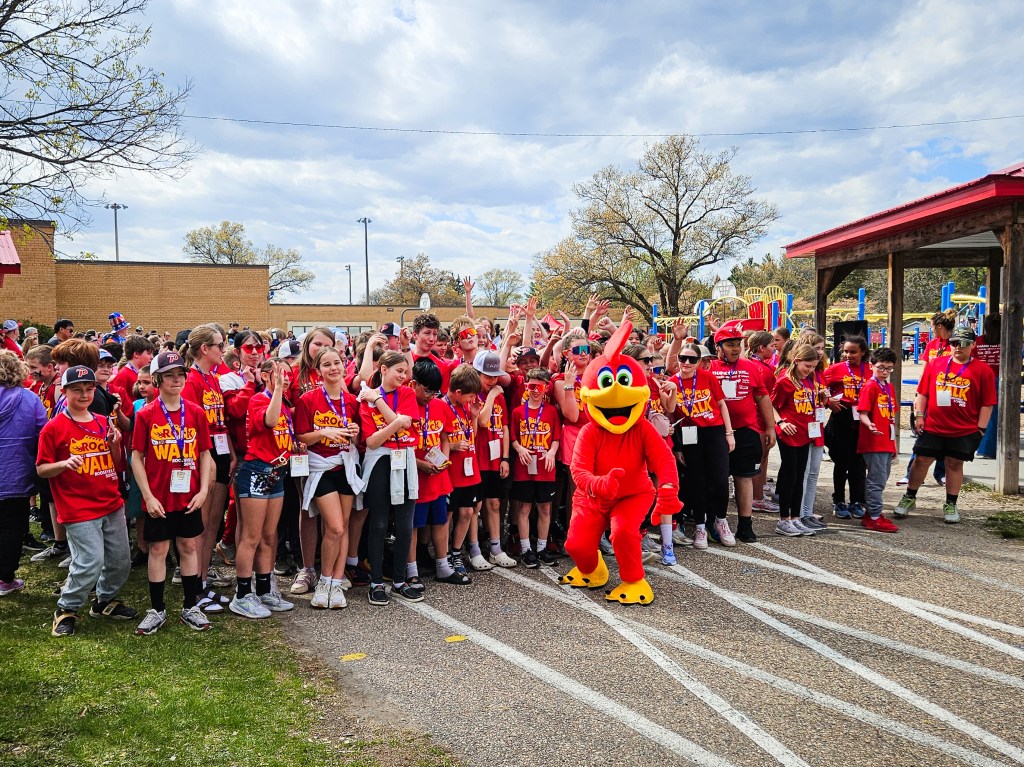
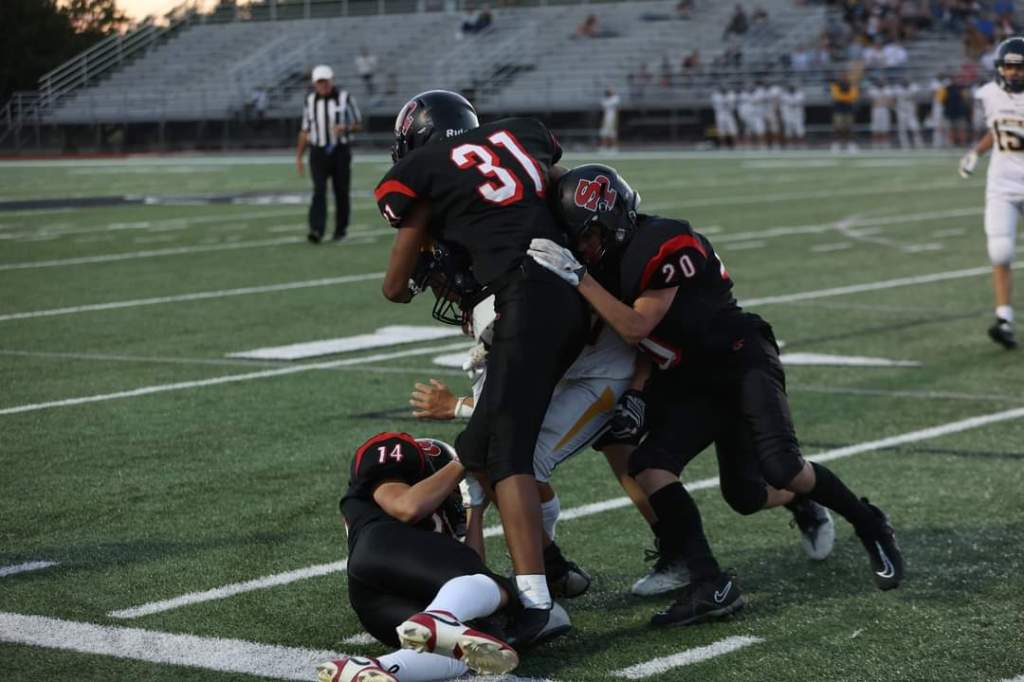
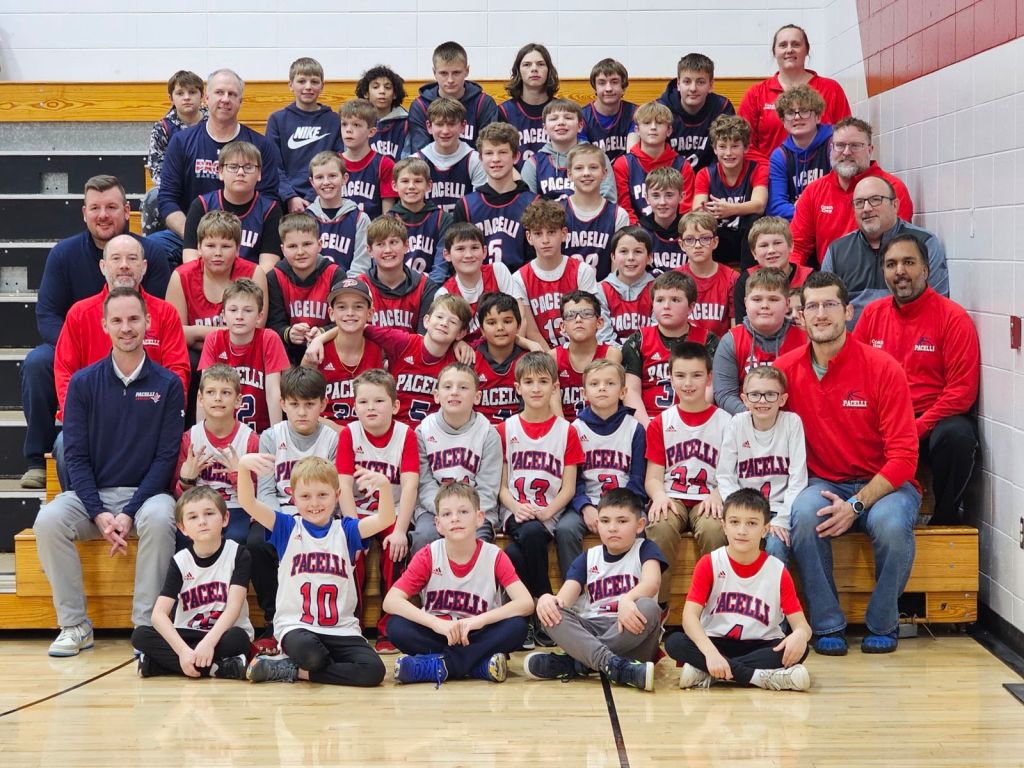
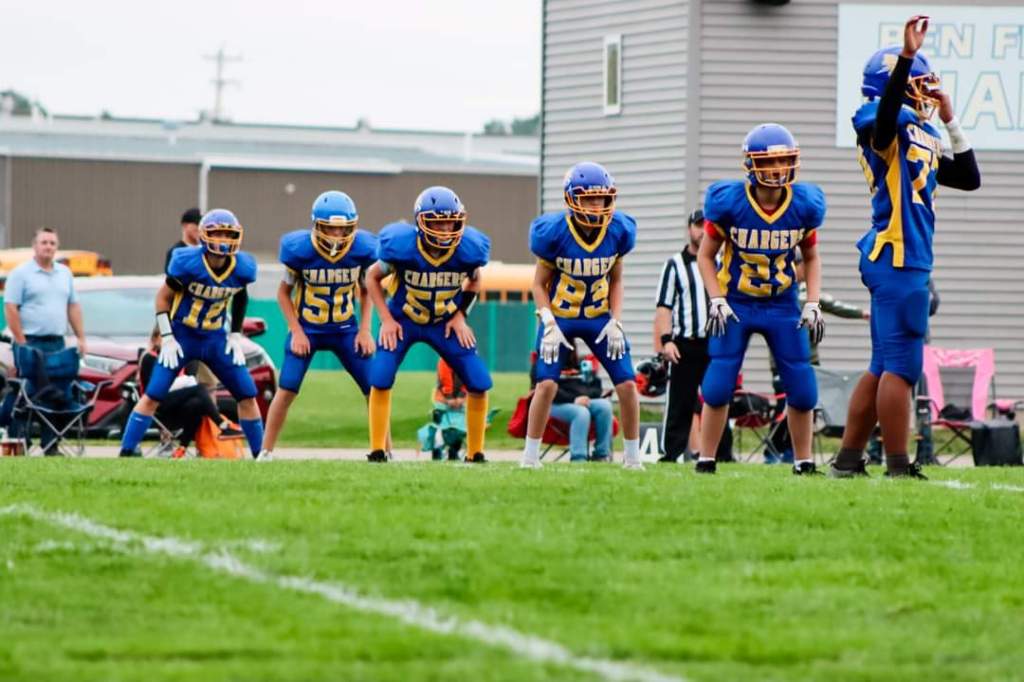
    And lastly, just a few examples of my photography that brings me joy:
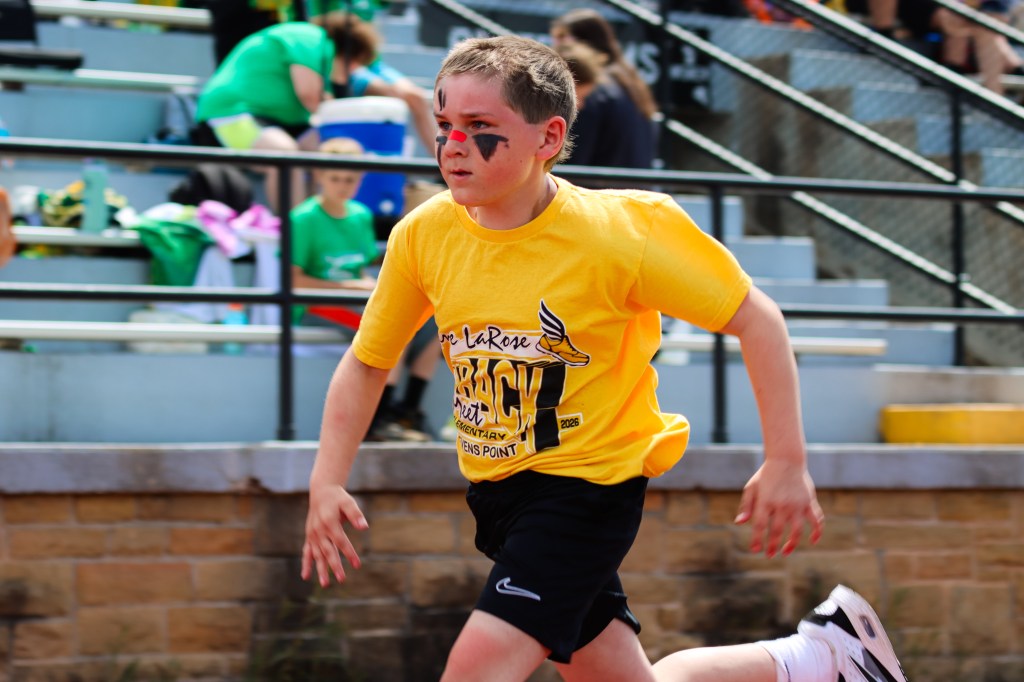
    DJT Photography (my brand), Elementary Track Meet Volunteer 📸
    DJT Photography, Roosevelt Elementary Rock the Walk Volunteer 📸
    DJT Photography, SPASH Football Volunteer 📸
    DJT Photography, Iola Car Show Volunteer 📸
    DJT Photography, Pacelli Hoyas Basketball Volunteer 📸
    DJT Photography, Ben Franklin Football Volunteer 📸
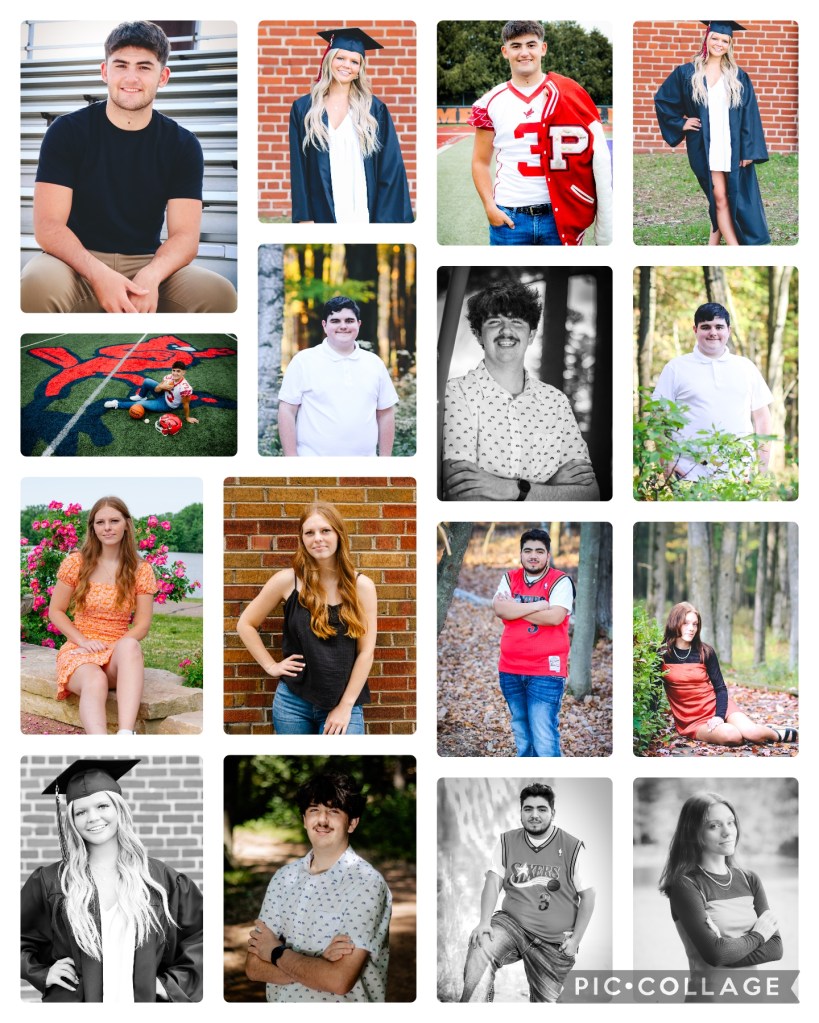
    DJT Photography 📸, some of my senior portraits.

  • Maybe God Had Other Plans

    I have been thinking a lot about Christa Pike.

    Not because I believe she is innocent. Not because I think what she did to Colleen Slemmer can be explained away, excused, or forgotten. And certainly not because I expect Colleen’s mother to forgive the woman who took her daughter’s life.

    What happened to Colleen was horrific. There is no softer word for it.

    I have read about what happened, and as a mother, I cannot imagine the pain of losing a child in such a violent and senseless way. I understand why Colleen’s mother has spent decades carrying anger, grief, and a desire for justice. I don’t presume to tell her how she should feel or whether she should ever forgive.

    But I also believe something very strongly:

    I do not believe that human beings have the right to take another person’s life as punishment.

    I am conservative. I am Catholic. And I know that some people may find those beliefs contradictory when it comes to the death penalty.

    They aren’t contradictory to me.

    My opposition to capital punishment isn’t rooted in sympathy for criminals or a belief that horrific crimes shouldn’t have severe consequences. I believe people should be held accountable for the things they do. I believe victims deserve justice. I believe society has a responsibility to protect innocent people from dangerous individuals.

    But I don’t believe that means we have been given the authority to play God.

    And then came what happened to Christa Pike.

    She was strapped to a table. The state of Tennessee attempted to execute her by lethal injection. Two doses of the execution drugs were administered, and the execution could not be completed.

    She survived.

    I don’t pretend to know what that means.

    I don’t know why it happened. I don’t know what God intends for Christa Pike. I don’t know whether this was simply a catastrophic failure of an execution procedure or something more.

    But as a person of faith, I cannot help but wonder.

    Maybe God had other plans.

    I know how that sounds.

    Some people will read that and think, How could you possibly say that about someone who did what she did to Colleen?

    Because believing that God may have spared someone’s life is not the same thing as saying that person doesn’t deserve accountability.

    Maybe the rest of Christa Pike’s life is supposed to be lived behind bars, facing the reality of what she did every single day.

    Maybe there are things she still needs to learn.

    Maybe there is repentance that has not yet happened.

    Maybe there are people she needs to help through her testimony.

    Maybe there is a possibility of redemption that none of us can see.

    Or maybe there is some purpose known only to God.

    That’s the thing about faith. We don’t always get to know the why.

    And I think that’s where my Catholic faith matters most.

    I believe in the sanctity of human life even when that life has been terribly misused. I believe that God created us, and that ultimately, our lives belong to Him.

    That doesn’t mean consequences disappear.

    It doesn’t mean forgiveness is owed.

    It doesn’t mean Colleen’s mother has to embrace Christa Pike or pretend that the murder of her daughter didn’t destroy a part of her life.

    It doesn’t mean we forget Colleen.

    Quite the opposite.

    Colleen deserves to be remembered.

    Her life should never become merely the footnote to the story of the woman who killed her.

    And perhaps that is another reason I struggle with the death penalty. When we execute someone, we don’t bring the victim back. We don’t erase the crime. We don’t restore the family that was shattered.

    We simply take another life.

    I know there are people who disagree with me. I understand why some believe that certain crimes are so terrible that death is the only appropriate punishment. I understand the desire for justice, especially when the victim’s life was taken so brutally.

    But I don’t believe justice requires me to believe that the government should have the power to decide when another human being’s life ends.

    I believe in justice.

    I also believe in mercy.

    And I believe that ultimately, God is better equipped than any of us to judge a human soul.

    So when I think about what happened to Christa Pike, I don’t think, She got lucky.

    I think about the fact that she was supposed to die, and she didn’t.

    And I can’t help but wonder if there is a reason.

    Maybe God spared her.

    Maybe He didn’t.

    I don’t know.

    But I know this: I am not going to presume to know God’s plans.

    I can condemn what Christa Pike did to Colleen Slemmer while still believing that Christa Pike’s life has value.

    I can grieve for Colleen and her family while believing that another death will not undo theirs.

    I can understand why a mother cannot forgive the person who murdered her child while still believing that forgiveness, repentance, and redemption ultimately belong in God’s hands.

    And I can believe that some people deserve to spend the rest of their lives behind bars without believing that any human being has the right to decide that another human being’s life is over.

    Because I don’t believe we are God.

    And maybe, just maybe, last night’s events were a reminder of that.

  • What We Inherit

    There is something about being Polish that runs deeper than a last name.

    It lives somewhere beneath the surface—in the stories we were raised on, in the food that somehow tastes like childhood, in the sound of a polka that can make an entire room move, and in traditions that have survived not because they were easy to preserve, but because someone decided they were worth preserving.

    Our family is proud to be Polish.

    Not because we believe being Polish makes us better than anyone else.

    But because it reminds us that we come from somewhere.

    And perhaps, in a world where so much seems to change so quickly, knowing where you come from matters more than we realize.

    Our ancestors came to America carrying more hope than possessions. They arrived speaking a language that wasn’t always understood, carrying customs that weren’t always welcomed, and trying to build a life in a country that often expected immigrants to leave pieces of themselves behind.

    Polish immigrants faced prejudice, discrimination, poverty, language barriers and pressure to assimilate.

    And still, they built.

    They worked.

    They sacrificed.

    They endured.

    They built homes and businesses. They raised children. They built churches and neighborhoods. They created communities. They took whatever they had and somehow made a life from it.

    They didn’t have everything handed to them.

    They earned it.

    Maybe that’s why hard work and perseverance feel like such a deeply rooted part of our identity.

    Because somewhere in the back of our minds—or perhaps somewhere much deeper—we know that the life we have was made possible by people who didn’t get to live it themselves.

    We inherited the results of sacrifices we never had to make.

    Think about that for a moment.

    Someone you’ve never met may have worked a job they hated so that their children could have opportunities they never had.

    Someone may have crossed an ocean knowing they might never see home again.

    Someone may have struggled to learn a new language while trying to make sure their children never went hungry.

    Someone may have experienced discrimination and still decided that this was the place where their family would build its future.

    Someone endured so that we could thrive.

    And now we get to decide what we do with that inheritance.

    For us, part of that inheritance is the way we love people.

    We feed people.

    We open our doors.

    We squeeze one more person around the table.

    We show up.

    We celebrate loudly.

    We dance.

    We laugh.

    And if you’ve ever been around a Polish family when the music starts, you know that sitting quietly in the corner was probably never going to be an option.

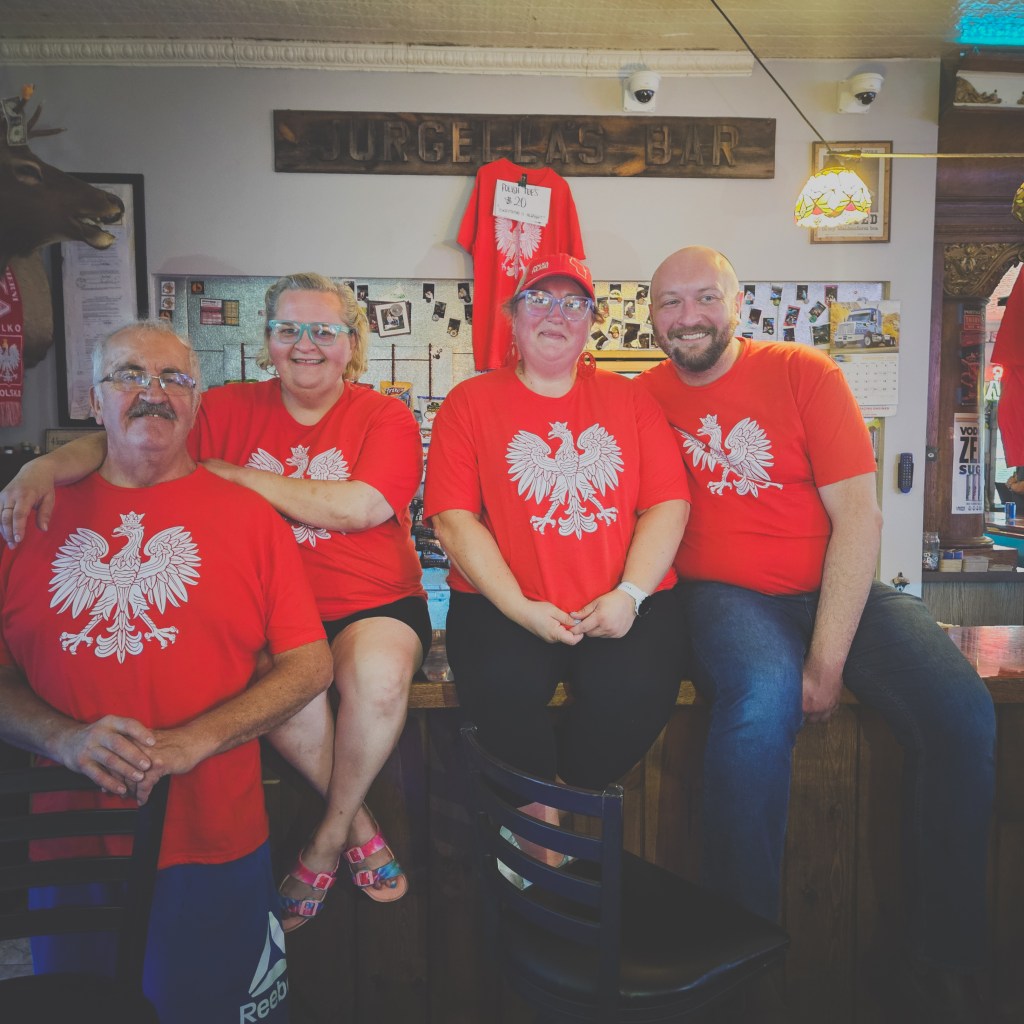
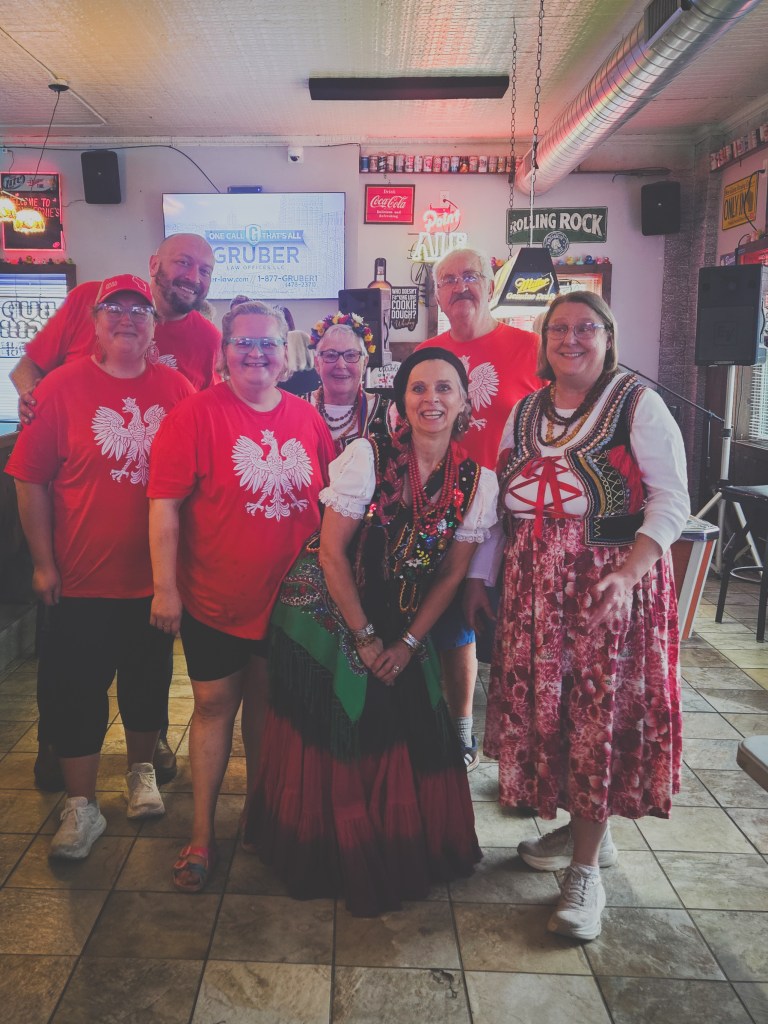
    This weekend, we celebrated Dożynki at my family’s tavern.

    And for a few hours, that place became something bigger than a tavern.

    It became a gathering place for generations.

    There was music.

    There was dancing.

    There was food, of course—gołąbki (stuffed cabbage rolls), pierogi (traditional Polish dumplings), and zupa grzybowa (Polish mushroom soup).

    There was laughter.

    There were people hugging, talking, remembering and making new memories.

    And as I looked around the room, I couldn’t help but think about how much history can exist in one room.

    Generations of Polish families.

    Generations of immigrants.

    Generations of people who came from somewhere else and built something here.

    Generations who carried pieces of the old country into the new one and refused to let those pieces disappear.

    That matters to me.

    Because heritage isn’t just about knowing the country your ancestors came from.

    It’s about understanding that your identity didn’t begin with you.

    Someone came before you.

    Someone struggled before you.

    Someone sacrificed before you.

    Someone dreamed before you.

    Someone loved before you.

    Someone crossed an ocean.

    Someone learned a new language.

    Someone worked with their hands.

    Someone raised children.

    Someone buried people they loved.

    Someone faced uncertainty.

    Someone endured things you will probably never have to endure.

    And somehow, through all of it, they found a reason to keep going.

    Maybe they even found a reason to dance.

    That is what I think about when I hear Polish music.

    I don’t just hear music.

    I hear continuity.

    I hear people who refused to disappear.

    I hear grandparents and great-grandparents whose names I may know only because someone bothered to remember them.

    I hear a culture that survived migration, hardship, prejudice and time.

    And I think about how easily these things can disappear.

    Not all at once.

    But quietly.

    One generation stops making the recipe.

    Another stops teaching the song.

    Someone stops telling the stories.

    The language isn’t passed down.

    The traditions become inconvenient.

    And eventually, something that survived for generations can disappear within one.

    That is why we celebrate.

    Not because we are stuck in the past.

    Because we understand that the past is part of us.

    We can embrace the future without abandoning the people who made it possible for us to have one.

    We can be American and still be Polish.

    We can belong here and still remember where our family began.

    We can appreciate other cultures without apologizing for loving our own.

    There is room for all of it.

    And maybe that’s the most beautiful part.

    Our heritage doesn’t require us to close our doors to anyone.

    It simply asks us not to forget the people who opened those doors for us.

    So yes, we are proud to be Polish.

    Proud of our ancestors.

    Proud of our culture.

    Proud of our food.

    Proud of our music.

    Proud of our dances.

    Proud of the traditions that have somehow survived generation after generation.

    And, yes, even a little proud of the stubbornness that seems to come with the territory.

    But more than anything, I am proud of what our heritage teaches us:

    Work hard.
    Love your people.
    Feed the hungry.
    Open your doors.
    Remember where you came from.
    And when life gives you a reason to celebrate, celebrate.

    Because someday, we will be the ancestors someone else remembers.

    And I hope that when they tell our story, they can say we carried something forward.

    That we remembered.

    That we loved our families.

    That we welcomed people into our home.

    That we laughed loudly and danced when the music played.

    That we understood the sacrifices that came before us.

    And that, despite everything, we kept the music playing.

    To everyone who came to celebrate Dożynki with us this weekend:

    Dziękuję.

    You didn’t just come to a party.

    You came home.

    And for one beautiful evening, we got to honor those who came before us, celebrate those standing beside us now, and give the generations who come after us something worth remembering.

    Niech żyje Polska. 🇵🇱❤️

  • When Mom Chooses the Man: The Children Who Learn They Come Second

    There is a particular kind of heartbreak that doesn’t look like abandonment at first.

    Mom is still there.

    She still has a phone. She still posts pictures. She still says she loves her children. She may even insist that everything she does is for them.

    But somehow, there is always a man.

    And somehow, the children keep coming second.

    I have a hard time understanding the woman who can look at her child—the little person who depends on her for security, consistency and unconditional love—and repeatedly choose the attention, approval or companionship of a romantic partner instead.

    Not once.

    Not during a difficult season.

    But as a pattern.

    The boyfriend gets the late-night phone calls.
    The boyfriend gets the weekends.
    The boyfriend gets the emotional energy.
    The boyfriend gets defended when the children have legitimate complaints.
    The boyfriend gets priority.

    And the children learn, sometimes without anyone ever saying the words:

    Mom chooses him. Not me.

    That lesson can be devastating.

    Psychology has long recognized that children need reliable, responsive caregiving to develop healthy relationships and emotional security. And research suggests that the quality of adults’ romantic relationships can spill over into their parenting. A longitudinal study following multiple generations found that romantic relationship functioning was associated with later parenting quality, while another study found that warmth and positive communication from a romantic partner could actually protect against harsh parenting. (PubMed)

    So this isn’t simply about a woman “having a boyfriend.”

    Of course mothers are allowed to fall in love.
    Of course mothers deserve companionship.
    Of course parents are allowed to have lives outside their children.

    That’s not the issue.

    The issue is when the relationship begins consuming the space that belongs to the parent-child relationship.

    And sometimes, the behavior starts looking disturbingly self-centered.

    Everything revolves around what she wants.

    She wants to feel loved.
    She wants to feel desired.
    She wants someone to tell her she’s beautiful.
    She wants someone to rescue her.
    She wants the excitement.
    She wants the validation.

    And if the children complain?

    They’re “jealous.”

    If they feel neglected?

    They’re “ungrateful.”

    If they don’t like the boyfriend?

    They’re “trying to ruin her happiness.”

    Suddenly, the children aren’t children anymore.

    They’re obstacles.

    That is where I think the word narcissistic enters the conversation—not necessarily as a clinical diagnosis, but as a description of a pattern of behavior in which the adult’s emotional wants consistently eclipse the needs and feelings of everyone around her.

    And there is another person in this equation that we don’t talk about enough:

    The man.

    Because if a man knowingly dates a woman who is neglecting her children to be with him, what exactly is he doing?

    A decent man doesn’t need to compete with children.

    He doesn’t need to be the center of her universe.

    He doesn’t need her to cancel plans with her kids so she can spend the weekend with him.

    He doesn’t need to be prioritized over a child’s birthday, school event, emotional crisis or basic needs.

    And if he notices that she’s neglecting her children for him, the healthy response isn’t:

    “Great. More time for me.”

    It should be:

    “You need to be with your kids.”

    That’s why I struggle with the idea that these men are simply “lucky” to have found a woman who is so devoted to them.

    Maybe sometimes they’re not lucky.

    Maybe they’re weak.

    Not because they are men.

    Not because they have relationships with single mothers.

    But because accepting a position of importance that comes at the expense of children requires a certain willingness to look away.

    A strong man doesn’t need to win a competition against a woman’s children.

    He doesn’t want to.

    He understands that children aren’t rivals.

    He understands that being a good partner sometimes means saying, “Go be Mom. I’ll be here.”

    And there is actually evidence that romantic partners can play a constructive role in parenting. Research has found that supportive romantic partners can help interrupt patterns of harsh or abusive parenting. (PubMed Central (PMC))

    That’s the part that gets lost.

    A romantic partner doesn’t have to be the problem.

    He can be part of the solution.

    He can encourage her to show up for her children.

    He can respect their place in her life.

    He can refuse to participate in manipulation or parental alienation.

    He can understand that dating someone with children means entering a family system—not replacing the children inside it.

    Because children notice.

    They notice who gets Mom’s attention.

    They notice who gets defended.

    They notice who gets her patience.

    They notice who she drops everything for.

    And eventually, they stop asking.

    That’s perhaps the saddest part.

    A neglected child doesn’t always become louder.

    Sometimes they become quieter.

    They stop expecting Mom to come.

    They stop telling her things.

    They stop asking for help.

    They stop believing they’re important.

    And eventually, they may grow into adults who understand exactly what happened but struggle to put words to it:

    “My mother loved having a man more than she loved being my mother.”

    That’s a brutal sentence.

    And I don’t think we should casually throw around accusations of narcissism, because narcissistic personality disorder is a clinical diagnosis—not a synonym for “selfish woman.”

    But we also shouldn’t hide behind diagnoses when the behavior itself is obvious.

    If a mother consistently sacrifices her children’s emotional needs for romantic attention, the behavior deserves scrutiny regardless of what diagnosis—if any—might explain it.

    And if a man knowingly accepts that arrangement, he deserves scrutiny too.

    Because love isn’t supposed to require someone else’s abandonment.

    A healthy relationship shouldn’t demand that children disappear so two adults can feel important.

    A good mother doesn’t have to stop being a woman when she becomes a mother.

    And a good man doesn’t need her to stop being a mother in order to be his woman.

    Children shouldn’t have to compete with adults for a place in their parent’s heart.

    And any relationship worth having should be strong enough to understand that.

  • I’m Trying to Understand Israel and Palestine

    I’m trying to understand the Israel-Palestine conflict.

    Not understand it enough to pick a team.

    Not understand it enough to repeat whatever slogan happens to be trending.

    Actually understand it.

    Because the more I read, the more I realize how incredibly complicated this is—and how much of the conversation seems to require pretending that half of the history doesn’t exist.

    And honestly?

    I have questions.

    A lot of them.

    First: What does “Free Palestine” actually mean?

    I hear people say “Free Palestine” constantly.

    But free Palestine from what?

    The Israeli occupation of the West Bank?

    The blockade and restrictions surrounding Gaza?

    Israeli settlements?

    Israeli sovereignty over territory Palestinians claim?

    Or does it mean eliminating Israel entirely?

    Because those are very different things.

    And I don’t think it’s unreasonable to ask someone what they actually mean when they say it.

    For many Palestinians and their supporters, “Free Palestine” means Palestinian self-determination—an independent Palestinian state and an end to occupation.

    For others, it means a single state covering the entire area between the Jordan River and the Mediterranean Sea.

    Those are radically different political visions.

    And here’s the question I keep coming back to:

    Can I support the Palestinian people’s right to freedom and self-determination without supporting Hamas?

    Of course I can.

    And can I believe Israelis have a right to live safely without believing every action taken by the Israeli government is justified?

    Of course I can.

    Why do we keep acting like those positions are mutually exclusive?


    But here’s where history gets really uncomfortable.

    I’ve heard people say:

    “That land belongs to the Palestinians.”

    I’ve also heard:

    “That land belongs to Israel because it is the ancestral homeland of the Jewish people.”

    And I keep thinking:

    Does land actually work that way?

    If my ancestors lived somewhere 2,000 years ago, does that give me ownership of that land today?

    Probably not.

    But if my grandparents were born somewhere, lived there their entire lives, built a home there and then were expelled from it, does that mean their descendants have no legitimate claim whatsoever?

    That doesn’t seem right either.

    And that’s one of the things I’m struggling with.

    Because Jews have an undeniable and ancient connection to this land.

    So do Palestinians.

    This isn’t a situation where one group has an ancient connection and the other just showed up recently.

    The modern conflict, however, is much more recent than the ancient histories invoked by both sides.

    The territory was part of the Ottoman Empire, then became the British Mandate for Palestine after World War I. In 1947, the United Nations proposed partitioning the territory into a Jewish state and an Arab state, with Jerusalem under a special international arrangement.

    The Jewish state became Israel.

    The proposed Arab Palestinian state did not.

    War followed.

    And the consequences of that war are still being felt today.


    The Nakba is real.

    During the 1948 war, more than 700,000 Palestinians became refugees. Some fled fighting. Others were expelled from their homes. Palestinian villages were destroyed or depopulated.

    The Palestinian term for this is the Nakba, meaning “catastrophe.”

    I don’t think anyone should minimize what happened.

    Imagine being told that the place your family has lived for generations is no longer your home.

    Imagine becoming a refugee because of a war you didn’t start.

    Imagine your children and grandchildren growing up without ever being allowed to return to the place your family came from.

    That’s not something I can just dismiss.

    But then I have another question.

    What happened to the Jews?

    They didn’t disappear.

    The Jewish people had also experienced centuries of persecution, expulsions and massacres in Europe and elsewhere, culminating in the Holocaust.

    Six million Jews were murdered.

    And after that, the idea of Jews having somewhere they could be safe wasn’t an abstract political theory.

    It was an existential question.

    So I find myself looking at this and thinking:

    How can we acknowledge the catastrophe suffered by Palestinians without pretending Jewish historical trauma didn’t happen?

    And how can we acknowledge Jewish historical trauma without pretending Palestinian displacement didn’t happen?

    Why does acknowledging one seem to require denying the other?


    Then there’s 1967.

    This is another major turning point.

    During the Six-Day War, Israel captured the West Bank, East Jerusalem and Gaza, along with other territory.

    Israel subsequently maintained control over the West Bank, while the political status of Gaza evolved differently after Israel’s 2005 withdrawal of its permanent ground presence and settlements there.

    The West Bank situation is especially important because Israeli settlements have expanded there over decades.

    And this isn’t merely something I have to take someone’s political word for.

    In 2024, the International Court of Justice issued an advisory opinion concluding that Israel’s continued presence in the Palestinian territory occupied since 1967 is unlawful and that its settlement policies and annexation-related practices violate international law and obstruct Palestinian self-determination.

    That’s a pretty significant finding.

    But then I have another question:

    If Israel believes its security requires maintaining control over portions of the West Bank, how does that get reconciled with Palestinian self-determination?

    And on the other side:

    If Palestinians achieve an independent state, what guarantees Israel that another armed group won’t use that territory to attack Israeli civilians?

    Those aren’t stupid questions.

    They’re both legitimate questions.


    And then there’s Hamas.

    This is where I absolutely cannot get on board with pretending that Palestinian suffering somehow makes Hamas’s actions acceptable.

    It doesn’t.

    Hamas-led forces murdered civilians on October 7, 2023.

    They kidnapped people.

    They took hostages.

    They committed atrocities against Israeli civilians.

    Those aren’t legitimate acts of resistance simply because Palestinians have legitimate grievances.

    You don’t get to murder a civilian because you have a legitimate political complaint.

    Period.

    And here’s something else I’ve struggled with:

    Why should an Israeli mother have to explain to her child why someone wants to kill her simply because she’s Israeli?

    Why should a Palestinian mother have to explain to her child why their home was destroyed or why someone they love was killed?

    Why do either of those mothers have to carry the consequences of decisions made by politicians and armed groups?


    But Hamas isn’t Palestine.

    This distinction matters enormously.

    Hamas is not every Palestinian.

    A Palestinian child isn’t Hamas.

    A Palestinian Christian isn’t Hamas.

    A Palestinian who hates Hamas isn’t Hamas.

    A Palestinian who wants peace isn’t Hamas.

    And the same principle works in reverse.

    The Israeli government isn’t every Israeli.

    An Israeli child isn’t Netanyahu.

    A Jewish grandmother in Tel Aviv isn’t responsible for every policy of the Israeli government.

    An Israeli who protests against settlement expansion isn’t responsible for it.

    So why are ordinary people constantly being assigned collective guilt for the actions of governments and militant organizations?


    And Israel isn’t innocent either.

    This is where I think conversations get dishonest.

    Israel absolutely has a right to protect its citizens.

    But does having a legitimate security concern give a country unlimited authority?

    No.

    International humanitarian law doesn’t work that way.

    The International Court of Justice has found serious violations relating to Israel’s policies in the occupied Palestinian territories, including settlement activity, annexation-related practices and restrictions affecting Palestinians.

    And there have also been extensive allegations and findings concerning Israeli conduct during the war in Gaza.

    So I have another question:

    If Hamas commits a war crime, does that make an Israeli response automatically lawful?

    No.

    And:

    If Israel commits a violation, does that somehow make Hamas’s attack on Israeli civilians legitimate?

    Also no.

    Why can’t we condemn both?


    This is where “both sides” gets tricky.

    I often hear:

    “Both sides are guilty.”

    I think that can be true.

    But I also think we need to be careful with what we mean.

    “Both sides have committed wrongdoing” does not mean every action is equivalent.

    Hamas is a non-state armed organization.

    Israel is a sovereign state with a powerful military and different legal obligations.

    The scale, circumstances, capabilities and responsibilities are not necessarily identical.

    So I’m not interested in saying:

    “They’re both equally bad.”

    That’s too simplistic.

    I’m interested in saying:

    Civilians on both sides have been harmed. Armed groups and governments have committed serious violations. Historical grievances are real. And none of those facts cancels out another fact.


    But here’s the question I keep getting stuck on:

    Who does the land actually belong to?

    And the more I think about it, the more I think maybe that’s the wrong question.

    Because what does “belong” even mean?

    Does a piece of land belong to the person whose ancestors lived there 2,000 years ago?

    The person whose grandparents lived there?

    The person who currently lives there?

    The government that controls it?

    The person who has a legal deed?

    The people who have historically inhabited the region?

    The people who were displaced from it?

    These aren’t the same thing.

    And maybe that’s the fundamental problem.

    Two peoples have developed national identities and political claims around the same piece of land.

    There isn’t a magic historical deed sitting in a drawer somewhere that says:

    Congratulations. You win Palestine.


    So what does “Free Palestine” mean to me?

    I’m still figuring that out.

    But I know what I don’t think it should mean.

    It shouldn’t mean:

    “Free Palestine by eliminating Israel.”

    And I don’t think Israeli security should mean:

    “Palestinians can remain indefinitely without genuine political freedom.”

    I don’t think Palestinian liberation requires hatred of Jews.

    And I don’t think Jewish safety requires hatred of Palestinians.

    I don’t think supporting Israel’s existence requires supporting every Israeli government policy.

    And I don’t think supporting Palestinian statehood requires supporting Hamas.

    Those distinctions seem incredibly obvious to me.

    So why are they so difficult to make?


    And then I get to the question nobody seems able to answer.

    When does it end?

    How many generations have to inherit the trauma?

    How many children have to grow up knowing the names of people killed before them?

    How many families have to bury sons and daughters?

    How many homes have to be destroyed?

    How many people have to become refugees?

    How many terrorist attacks can a population endure before fear becomes part of its identity?

    How many military operations can another population endure before anger becomes part of its identity?

    At what point do we stop asking:

    “Who started it?”

    and start asking:

    “How do we stop it?”

    Because if the answer is that peace can only happen after one side completely defeats the other, then what exactly are we waiting for?

    Another generation?


    Maybe the hardest question is this:

    What if neither side gets everything it wants?

    What if Israel doesn’t get every piece of territory it considers historically or strategically important?

    What if Palestinians don’t get every piece of territory they consider historically theirs?

    What if refugees don’t get every outcome they want?

    What if Jerusalem requires compromise?

    What if security requires international guarantees?

    What if Palestinian sovereignty requires Hamas to give up armed control?

    What if Israeli settlements require painful political decisions?

    What if peace requires both peoples to accept something they believe is profoundly unfair?

    Because that’s what compromise usually looks like.

    Nobody gets everything.


    I don’t pretend to have solved this.

    I’m not an expert on the Middle East.

    I’m not Palestinian.

    I’m not Israeli.

    And I’m certainly not going to pretend I understand what it’s like to grow up fearing rockets, terrorism, occupation, displacement or war.

    But I do think we’re capable of something better than shouting slogans at each other.

    I can believe Palestinians deserve freedom.

    I can believe Israelis deserve safety.

    I can condemn Hamas.

    I can criticize the Israeli government.

    I can acknowledge the Nakba.

    I can acknowledge the Holocaust.

    I can acknowledge Jewish historical ties to the land.

    I can acknowledge Palestinian historical ties to the land.

    I can believe that civilians on both sides deserve to live.

    And I can still ask uncomfortable questions.

    Actually, I think we need to ask them.

    Because maybe the goal shouldn’t be figuring out which people have the better historical claim to the land.

    Maybe the goal should be figuring out how two peoples who believe that land is home can both have a future there.

    And maybe the first step toward peace isn’t deciding which side we’re supposed to hate.

    Maybe it’s being willing to say:

    “Your suffering is real. Mine doesn’t become less real because yours is real too.”

  • The Influencer Who Wants You to Know She’s One of the Good Ones

    You know the woman.

    She has 450,000 followers and a perfectly lit kitchen.

    She talks about the invisible labor women perform every day. She talks about the mental load. She talks about how mothers are expected to remember the dentist appointments, buy the birthday presents, schedule the physicals, pack the lunches, notice when the toilet paper is running low and somehow know that Tuesday is “wear red for spirit week.”

    And you know what?

    She’s often absolutely right.

    She says women shouldn’t have to carry everything.

    She says mothers deserve more support.

    She says women shouldn’t have to make themselves smaller to make everyone else comfortable.

    She talks about workplace inequality, the pressure placed on mothers, unrealistic expectations of female perfection and the absurdity of expecting women to simultaneously have successful careers, spotless homes, emotionally regulated children and immaculate eyebrows.

    And I’m nodding along.

    Yes. Exactly.

    And then she gets to politics.

    Suddenly, the woman who just spent ten minutes explaining that women are complex human beings becomes remarkably comfortable reducing roughly half the country to a caricature.

    Republicans are stupid.

    Conservatives are hateful.

    Trump voters are immoral.

    Anyone who disagrees with her worldview is either ignorant, selfish, bigoted, or apparently suffering from some mysterious deficiency of empathy.

    And there it is.

    The contradiction.

    Because apparently the lesson is:

    Don’t stereotype women. Unless they’re conservative.

    Don’t reduce people to political labels.

    Unless the political label is Republican.

    Don’t assume you know someone’s life.

    Unless you can infer their entire character from the candidate they voted for.

    Don’t judge people.

    Unless you’re judging the people who deserve it.

    And somehow, this is presented as compassion.

    The mental load apparently has a political party

    Here’s what fascinates me about this particular brand of influencer.

    She will tell you that women are exhausted because they’ve been conditioned to monitor everyone else’s emotions.

    Then she’ll spend three hours monitoring the moral failures of strangers on Facebook.

    She’ll tell you that women shouldn’t be expected to perform emotional labor for everyone.

    Then she’ll demand that everyone around her demonstrate the correct emotional response to every political event.

    She’ll tell you that women should be allowed to define themselves rather than being defined by other people.

    Then she’ll define millions of people she has never met as selfish, racist, hateful, stupid or dangerous based largely on their politics.

    She’ll criticize the patriarchy for creating rigid hierarchies of human worth.

    Then she’ll create her own hierarchy:

    People who think correctly.

    And everyone else.

    That isn’t feminism.

    That’s tribalism wearing feminist jewelry.

    And this is where the psychology gets interesting

    I’m not interested in diagnosing some random woman on Instagram with narcissistic personality disorder because she made a smug political reel.

    But there are legitimate psychological concepts that help explain this behavior.

    One is moral grandstanding: using moral language partly to establish status, prestige or social standing.

    Researchers studying moral grandstanding have found that status-seeking motivations are associated with greater political and moral conflict, and that prestige-motivated grandstanding is associated with ideological extremity and affective polarization.

    In other words, sometimes the point of a moral statement isn’t merely:

    “I believe this is right.”

    It can also communicate:

    “Look at what kind of person I am for believing this.”

    And social media is practically engineered for this.

    Post something nuanced about the difficulty of balancing motherhood and a career?

    You might get 200 likes.

    Post something about how your political opponents are horrible human beings?

    Now you’re getting comments, shares, applause, outrage and people tagging their friends.

    Research on social media and morality suggests exactly this kind of dynamic: morally and emotionally evocative content is especially good at capturing attention, while social media can amplify outrage, status-seeking and conflict between groups.

    So the platform gradually teaches people something.

    Nuance gets polite applause.
    Outrage gets engagement.

    And engagement feels an awful lot like validation.

    The hero complex

    Then there is the temptation to become the hero of your own content.

    Every story needs a villain.

    The exhausted mother needs an oppressive husband.

    The enlightened woman needs the ignorant woman.

    The feminist needs the misogynist.

    The compassionate person needs the hateful person.

    And the politically enlightened influencer needs the Republican.

    It creates a wonderfully simple story:

    I am fighting injustice.

    And if I’m fighting injustice, then anyone opposing me isn’t simply disagreeing with me.

    They’re part of the injustice.

    That is an extraordinarily comfortable psychological position.

    Because once you have cast yourself as the hero, you don’t have to examine yourself nearly as closely.

    Your anger becomes righteous.

    Your contempt becomes courage.

    Your certainty becomes intelligence.

    Your inability to tolerate disagreement becomes “having boundaries.”

    And your political tribalism becomes “knowing where I stand.”

    But here’s the hypocrisy I can’t get past

    If your feminism teaches that women deserve to be seen as individuals rather than stereotypes, then apply that principle universally.

    If motherhood has taught you that people’s lives are complicated, assume other people’s lives are complicated too.

    If you believe women deserve grace for imperfect choices, perhaps extend some grace to the woman who voted differently than you.

    If you believe people should be judged by their actions rather than assumptions about their identity, don’t assume you know the character of millions of strangers because of their political affiliation.

    And if you genuinely believe empathy is important, don’t make empathy something you reserve exclusively for people who already agree with you.

    Otherwise, what you’re practicing isn’t empathy.

    It’s affiliation.

    And conservatives do this too

    Before anyone starts congratulating themselves, let’s be clear:

    Conservatives have their own version of this.

    The Christian who constantly talks about loving thy neighbor while treating political opponents as enemies.

    The “family values” guy who thinks every liberal mother is destroying America.

    The person who talks endlessly about personal responsibility while making excuses for his own side.

    The person who demands free speech until someone says something he doesn’t like.

    The difference isn’t that one political tribe is uniquely hypocritical.

    The difference is that we are exceptionally good at noticing hypocrisy in our opponents and exceptionally creative at explaining it away in ourselves.

    That’s the real problem.

    Maybe the question isn’t “Are you a good person?”

    Maybe the better question is:

    What do you need other people to believe about you?

    Do you need to be the smartest person in the room?

    The most compassionate?

    The most enlightened?

    The most oppressed?

    The person who “gets it”?

    The person brave enough to say what everyone else is afraid to say?

    The person on the right side of history?

    Because social media gives us an unprecedented opportunity to construct a public version of ourselves and then invite strangers to applaud it.

    And once your politics becomes part of your identity as a good person, changing your mind becomes much harder.

    You’re no longer defending an opinion.

    You’re defending yourself.

    That’s why political disagreement can feel so personal.

    If I say your policy is wrong, that’s an argument.

    If you have convinced yourself that your political beliefs are evidence of your compassion, intelligence and moral character, then disagreement can feel like an attack on your identity.

    And suddenly, the person who disagrees with you isn’t merely wrong.

    They’re bad.

    Research on online moral discourse suggests that people routinely overestimate how much outrage and hostility exists between opposing groups, which can make the political world look even more divided and hostile than it actually is.

    So maybe we should be suspicious of anyone—left or right—who seems to require a villain in order to establish their own virtue.

    Especially when that villain is always someone else.

    Because there’s a peculiar kind of arrogance in saying:

    “I don’t judge people.”

    while spending half your feed explaining why the people on the other side are terrible.

    And perhaps the most uncomfortable possibility is this:

    Maybe some of the people shouting loudest about being good aren’t actually trying to make the world better.

    Maybe they’re trying to make themselves feel better about who they are.

    And those aren’t always the same thing.

  • The Day I Watched the World Change From a Television Screen

    I was 22 years old on September 11, 2001.

    I was engaged to be married. October was just weeks away. My life was moving forward in the ordinary, beautiful way young adulthood is supposed to move forward.

    And then, in a matter of hours, the world became something different.

    I watched it happen on television.

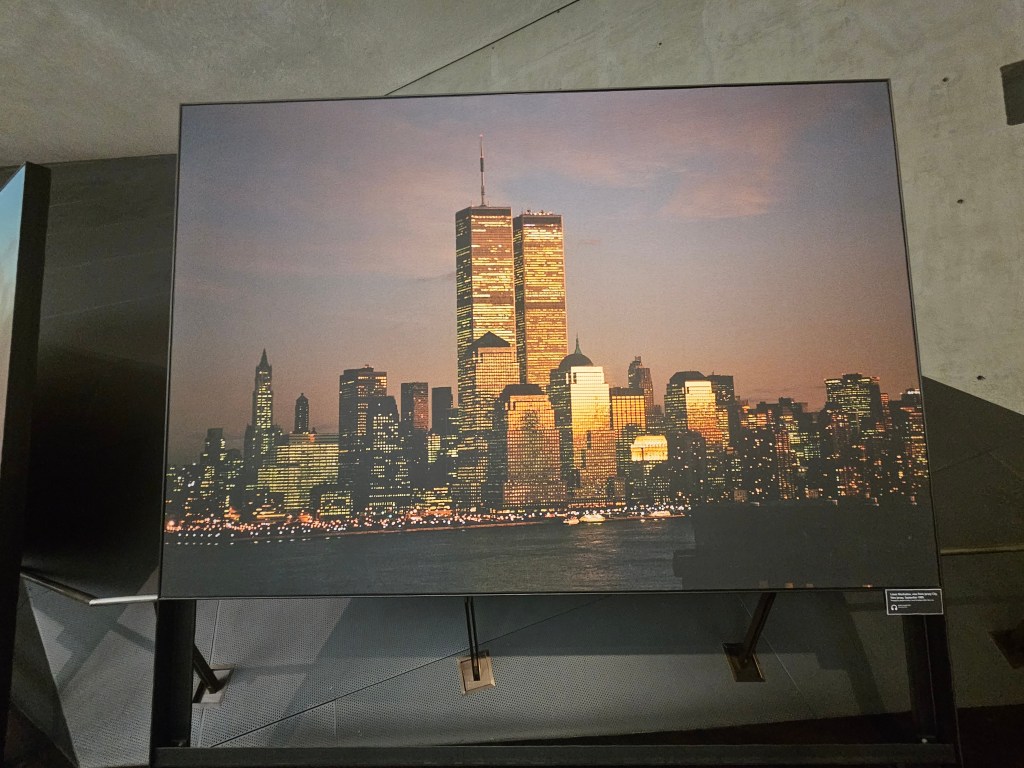
    That is one of the strangest things about being part of a generation shaped by 9/11. We witnessed one of the most horrific days in American history from couches, kitchen tables, classrooms and offices. We watched smoke pour from buildings we had never visited. We watched people run. We watched the towers collapse.

    And then we watched it again.

    And again.

    The images were impossible to comprehend, yet somehow impossible to look away from.

    I remember the disbelief. The confusion. The sick feeling that this couldn’t possibly be happening in the United States. I remember realizing that this wasn’t a movie, wasn’t some distant war happening on the other side of the world.

    People were dying.

    Thousands of them.

    And even though I was a thousand miles away, something about that day lodged itself permanently inside me.

    September 11, 2001 is not a memory I simply remember. It is something I carry.

    For years, I carried another strange feeling with it.

    In 2008, I took my first trip to New York City. I desperately wanted to go to Ground Zero.

    But I couldn’t.

    I got close, but something stopped me.

    At the time, Ground Zero was not the memorial we know today. It was still an enormous, active construction site—a massive excavation cut deep into the earth, surrounded by fencing, machinery, steel and the beginnings of rebuilding.

    Perhaps that was part of it.

    But I think there was something deeper.

    I wanted to see it.

    And I didn’t want to see it.

    I felt pulled toward that place and, at the same time, almost afraid of what I might feel when I stood there.

    So I walked away.

    For years afterward, I wondered why.

    What was I afraid of?

    Maybe I wasn’t ready to turn something I had experienced through a television screen into something physical.

    Because as long as Ground Zero remained somewhere in New York, it was possible to keep September 11 at a distance.

    I could remember the images.

    I could remember the names.

    I could remember the horror.

    But I didn’t have to stand on the ground where it happened.

    This past August, nearly 25 years after that terrible day, I returned to New York City with my two youngest sons.

    We had an incredible trip. We laughed. We explored. We ate amazing food. We saw the city from above and below. We made memories.

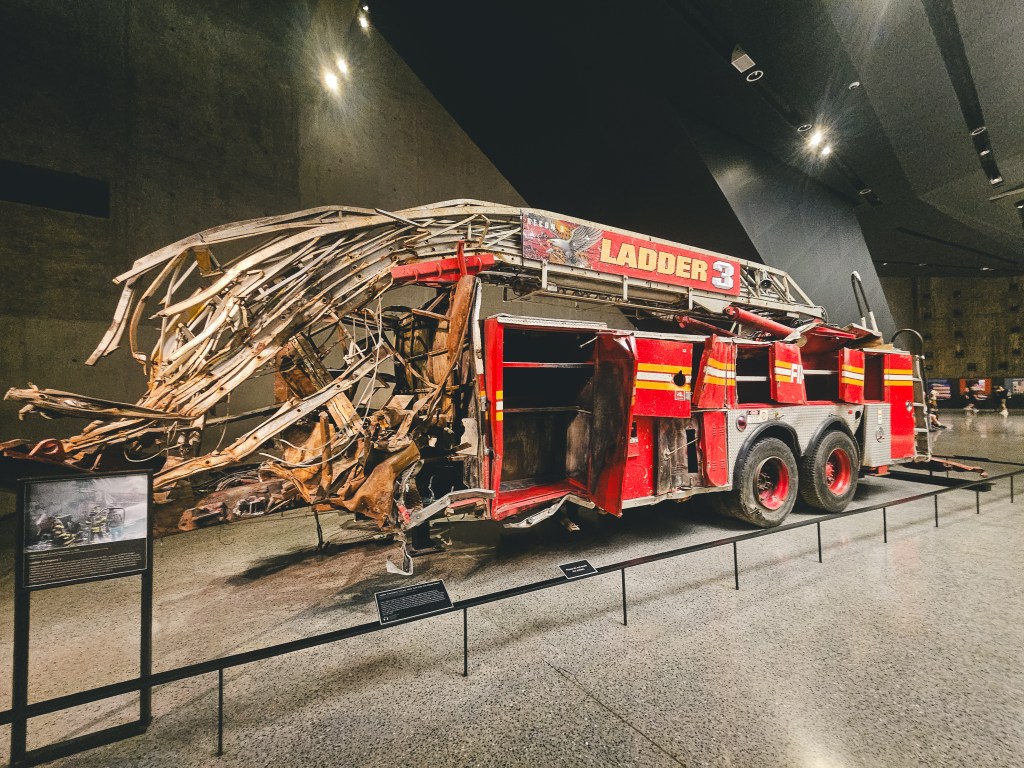
    And then, on our final day, we went to the 9/11 Memorial & Museum.

    This time, I walked in.

    And there is something profoundly different about experiencing 9/11 when you are no longer looking at it through a television screen.

    Because eventually, the realization hits you:

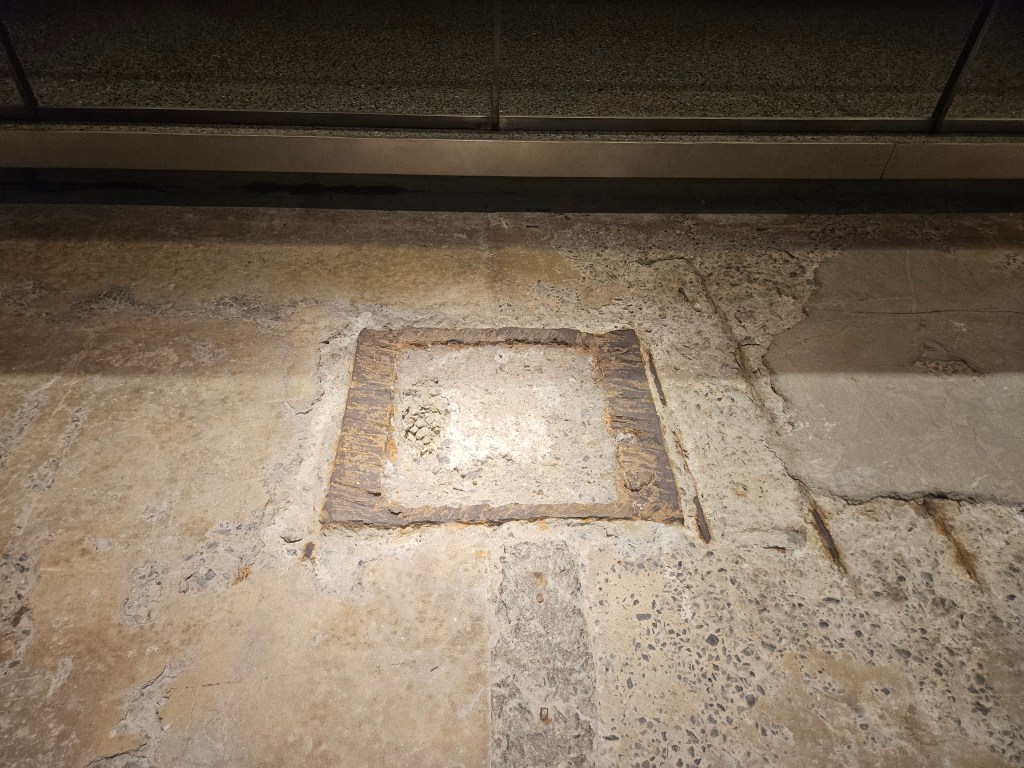
    You are standing where they died.

    Not near it.

    Not somewhere that represents it.

    You are standing on the footprint of the place where thousands of human beings went to work that morning and never came home.

    People who had families.

    People who had plans for that evening.

    People who were worried about ordinary things.

    People who thought they were going to have another tomorrow.

    And suddenly, the enormity of what happened becomes almost impossible to hold in your mind.

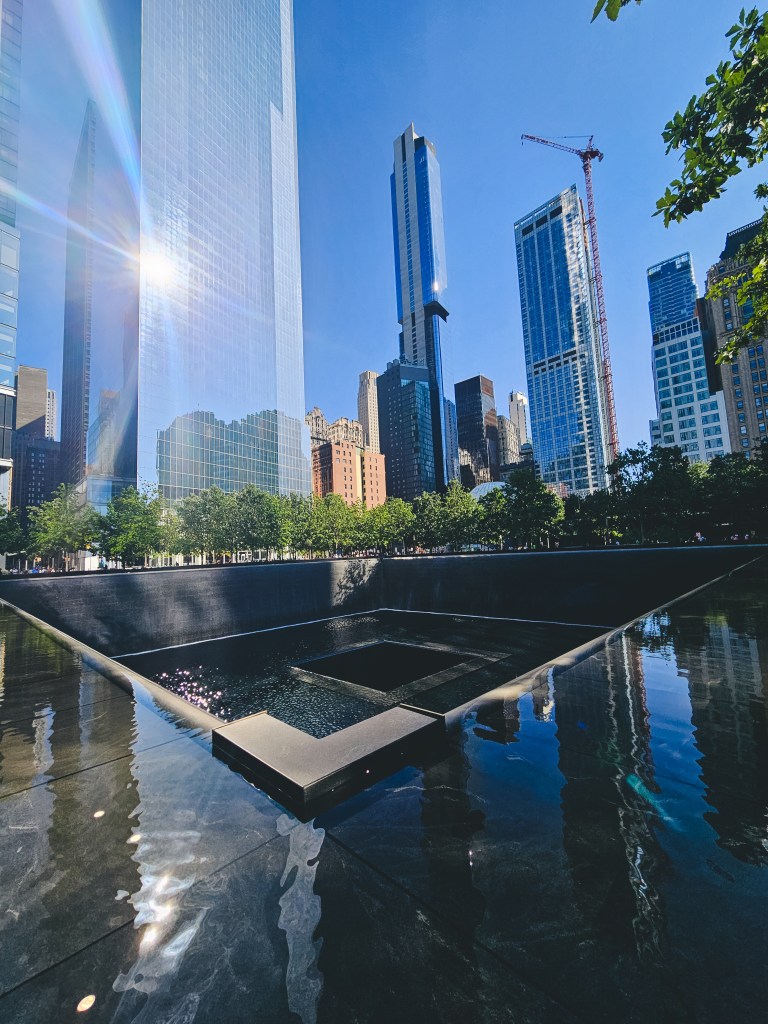
    The museum is incredibly powerful, but the memorial pools affected me in a way I wasn’t expecting.

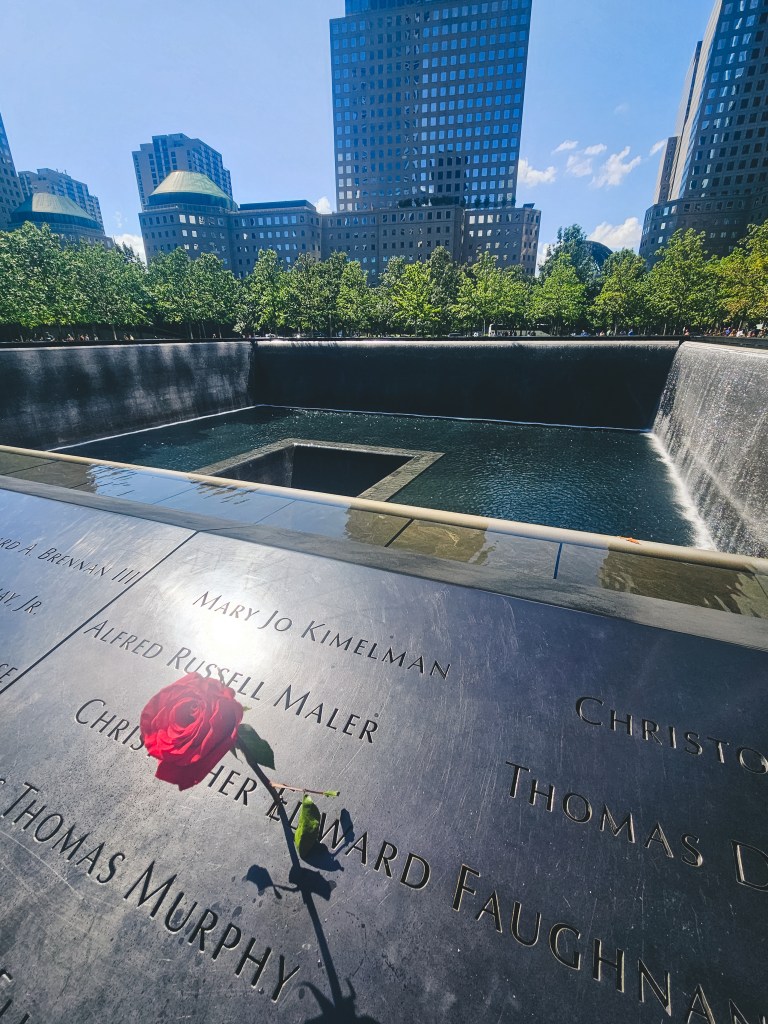
    The names.

    Thousands of them.

    I traced some of those names with my finger.

    And I prayed.

    For the people whose names were beneath my hand.

    For their families.

    For the firefighters and police officers and paramedics who ran toward the buildings while everyone else was running away.

    For the people trapped above the fires.

    For the people who jumped because there was nowhere left to go.

    For the passengers on those airplanes.

    For the people in the Pentagon.

    For the people in Shanksville.

    For the children who grew up without a parent.

    For the spouses who came home to an empty chair.

    For the parents who never got another phone call.

    And then the wind moved across the water.

    The pools are enormous, and the water constantly disappears into the darkness below.

    When the wind blows, the water sprays across the edges.

    For a moment, standing there, it almost felt like a cleansing.

    Of what, I don’t know.

    Grief?

    Anger?

    Twenty-five years of carrying images in my head?

    Maybe it was simply nature doing what nature does—moving water, moving air, continuing on.

    But standing there, I felt something I couldn’t quite put into words.

    Maybe it was finally being where I had needed to be all those years ago.

    Maybe the part of me that had been pulled toward Ground Zero in 2008 had finally caught up with me.

    And I realized something else.

    There are some places you don’t visit simply to see them. You visit them to bear witness.

    That is what this trip became for me.

    I wasn’t there for a photograph.

    I wasn’t there because it was another tourist attraction on our itinerary.

    I was there because I had spent nearly 25 years carrying September 11 from a television screen inside my head.

    And finally, I stood on the ground.

    I stood there as a 47-year-old woman instead of the 22-year-old young woman who had watched the towers fall while planning her wedding.

    So much of my life happened in between.

    I got married.

    I became a mother.

    I watched my children grow.

    I experienced joy and heartbreak and ordinary Tuesdays and birthdays and Christmases and all the little moments that make up a life.

    The people whose names are carved into those memorials never got any of that.

    That may be the hardest realization of all.

    They didn’t get the ordinary things.

    They didn’t get another birthday.

    Another Christmas.

    Another argument with their spouse.

    Another morning coffee.

    Another hug from their child.

    Another chance to complain about traffic.

    Another completely unremarkable Tuesday.

    They simply disappeared from the future they thought they had.

    And that is why I don’t think we should ever allow September 11 to become merely a date in a history textbook.

    It wasn’t history to the people who died.

    It wasn’t history to the people who survived.

    It wasn’t history to the firefighters who climbed those stairs.

    It wasn’t history to the families who waited for someone who never came home.

    And it wasn’t history to the 22-year-old woman sitting in front of her television, watching in horror and trying to understand how the world she knew could suddenly become so terrifying.

    Twenty-five years later, I finally stood there.

    I finally touched the names.

    I finally looked into the place where those buildings once stood.

    And I finally understood why I had been unable to go in 2008.

    Sometimes grief has its own timetable.

    Sometimes we aren’t ready.

    And sometimes, years later, we find ourselves standing in the place we’ve spent years avoiding—and realize that we weren’t being held back.

    We were waiting until we were ready to bear witness.

    I am so grateful I went.

    It was one of the most somber experiences of my life.

    And it was absolutely worth it.

    For them.

    For their families.

    For the people who ran toward danger.

    For the survivors.

    For the generations who will never know the world exactly as it was before that morning.

    And for the 22-year-old woman who watched it all unfold on a television screen and never forgot.

    We will never forget.

    ————————————————————

    The twin towers before 9/11/2001
    Ground zero in 2008 (photo from The Guardian, 9/9/2008)
    A destroyed fire truck, FDNY, from 9/11/01.
    South Infinity Pool.
    North Infinity Pool
    Original beam of the North Tower.

  • If They Celebrate His Murder, What Would They Say About Mine?

    Today is a hard day.

    One year ago today, Charlie Kirk was murdered while doing something he had spent years doing: standing in front of people who disagreed with him and talking.

    Arguing.

    Challenging.

    Provoking.

    Listening.

    Sometimes getting it wrong. Sometimes getting it right. Sometimes irritating the hell out of people.

    But he showed up.

    And someone decided that disagreement had crossed the line into justification for murder.

    That should horrify every decent person, regardless of political affiliation.

    Yet today, one year later, I am seeing things online that have left me genuinely shaken.

    People mocking Charlie’s death.

    People celebrating it.

    People making jokes about the shooting.

    People posting things that may not explicitly say, “I am glad he was murdered,” but come damn close enough that everyone knows what they mean.

    And I’ve had an uncomfortable realization.

    There are people on my Facebook feed whom I no longer want in my life.

    Not because they are liberal.

    Not because they voted differently than I did.

    Not because they disagree with me about abortion, Donald Trump, immigration, gender, taxes, guns, or any other political issue.

    I can handle disagreement.

    Hell, I expect it.

    I have friends with whom I disagree about enormous things. I love people who don’t vote like I do. I don’t need everyone around me to share my worldview.

    But there is a line between disagreeing with someone’s beliefs and celebrating their destruction because of those beliefs.

    That line matters to me.

    And perhaps the most disturbing part is that Charlie himself seemed to understand something I am still struggling to learn.

    He was remarkably willing to engage people he disagreed with.

    He would sit across from college students who openly despised him and say, essentially, Come talk to me.

    He didn’t require agreement before granting someone humanity.

    I admire that enormously.

    And I’m going to be honest:

    I’m not sure I’m that strong.

    Maybe that is my own uncomfortable confession today.

    I don’t know that I can embrace someone with compassion after watching them celebrate the murder of someone simply because they hated what he believed.

    I can forgive someone for having different political opinions.

    I can understand that reasonable people can reach radically different conclusions.

    I can even laugh at myself when someone makes a good point that challenges my assumptions.

    But if you see a man murdered for his political beliefs and your reaction is good, he deserved it, one less fascist, or some variation of I have no sympathy because I hated him…

    I need some distance from you.

    And I’m not going to apologize for that.

    Because here’s the question I can’t stop thinking about:

    If someone took my life because of my conservative beliefs, what would you say?

    Would you mourn?

    Would you say, What a tragedy. I disagreed with her, but she didn’t deserve that.

    Or would you say:

    Good.

    She got what she deserved.

    One less conservative.

    I’m not going to lose sleep over it.

    Would you celebrate?

    Would you make memes?

    Would you turn my death into a punchline?

    Because if you could do that to Charlie, I have to wonder what you would do if the person being carried away in a body bag was me.

    And that’s where this stops being theoretical.

    Because Charlie wasn’t murdered because he was a murderer.

    He wasn’t killed because he had physically harmed the people who disagreed with him.

    He was killed because someone allegedly decided that his political expression made him worthy of death. Prosecutors have alleged that Robinson targeted Kirk because of his political expression, and the case is now headed toward trial.

    That is terrifying.

    Because once we decide that certain opinions make people less deserving of life, the principle doesn’t stay neatly contained on one side of the political aisle.

    It never does.

    Today it’s Charlie Kirk.

    Tomorrow it’s someone you love.

    And eventually, perhaps, it’s you.

    That’s why I don’t care whether you liked Charlie.

    You didn’t have to.

    You could think he was arrogant.

    You could think he was wrong.

    You could think his politics were dangerous.

    You could think his rhetoric was inflammatory.

    You could despise everything he stood for.

    And still believe he should be alive.

    That’s the bare minimum.

    Actually, it’s more than the bare minimum.

    It is civilization.

    We are supposed to be able to hate an idea without hating the person who holds it.

    We are supposed to be able to argue without annihilating one another.

    We are supposed to believe that the person across the political aisle is still a human being whose life has value.

    And when we lose that?

    We have lost something far more important than an election.

    We’ve lost the ability to coexist.

    So yes, today I am grieving Charlie Kirk.

    I’m grieving the husband who lost his life.

    I’m grieving the father whose children will grow up without him.

    I’m grieving a young man who had an enormous amount of life left to live.

    And I’m grieving something else, too.

    I’m grieving the people I thought understood the difference between political disagreement and moral depravity.

    Some of them apparently don’t.

    And maybe that’s okay.

    Maybe this is what boundaries are for.

    I don’t have to hate them.

    I don’t have to attack them.

    I don’t have to convince them.

    I can love some people from a distance.

    But I don’t have to keep people in my life who make me question whether they believe my life would still have value if they hated my politics enough.

    Charlie spent his life telling people to debate him.

    He invited people to challenge him.

    He believed ideas should be confronted with better ideas.

    And perhaps the best way to honor him isn’t by becoming more hateful ourselves.

    Perhaps it is by refusing to become the thing that killed him.

    We can disagree.

    We can argue.

    We can challenge one another.

    We can even despise each other’s politics.

    But we don’t get to decide that our political opponents are less human.

    And we certainly don’t get to celebrate when they’re dead.

    Because the moment we start cheering for political murder, we aren’t defending our values anymore.

    We’re abandoning them.

  • Part Two: Who Gets to Define Womanhood?

    My last post was about a Rebecca Solnit quote that has been rattling around in my head for months:

    “One of the rights that the powerful often assume is the power to dictate reality.”

    The more I think about it, the more I see another uncomfortable question hiding inside it.

    And this one takes me somewhere I suspect a lot of people would rather I didn’t go.

    What happens when someone enters a category historically defined by the exclusion and oppression of another group—and then assumes the authority to tell that group what its own category means?

    Let’s talk about women.

    Specifically, trans women.

    Before anyone reaches for the outrage button, let me make something very clear: I am not questioning whether every trans person is sincere about their identity. I’m not suggesting every trans woman has the same life experience, social circumstances, privilege, or relationship with power. Some trans people experience profound discrimination and vulnerability, and I’m not interested in pretending otherwise.

    That’s not my argument.

    My argument is about power.

    And Solnit’s quote gives us a fascinating lens through which to examine it.

    What happens to power when you change categories?

    A person who was born male and raised in a society that, rightly or wrongly, often affords males greater physical, social, and institutional authority does not necessarily shed every bit of that history, conditioning, confidence, or socialization simply by changing their identity.

    Why would they?

    We don’t generally believe that social conditioning disappears overnight.

    And yet, in some of the loudest contemporary arguments about sex and gender, I see something that feels strangely familiar.

    A male person enters a female social category—and then, in some cases, tells women what womanhood means.

    Tells women what their boundaries should be.

    Tells women what language they should use.

    Tells women which spaces they should be comfortable sharing.

    Tells women that their discomfort is prejudice.

    Tells women that their understanding of their own sex is outdated, bigoted, or simply wrong.

    And I can’t help thinking:

    Isn’t that exactly the kind of power Solnit was talking about?

    The irony isn’t lost on me.

    For centuries, women were told what we were by men.

    Men defined our roles.

    Men defined our sexuality.

    Men defined our legal rights.

    Men defined our reproductive choices.

    Men defined what was appropriate for women to wear, say, think and do.

    Men told us what our bodies meant.

    Men told us what we were allowed to be.

    And now we’re having a cultural argument in which some women are being told that their understanding of womanhood itself is wrong.

    By whom?

    Increasingly, by people who were not born female.

    That’s a pretty extraordinary historical reversal.

    And I think we’re allowed to examine it.

    Here’s the question that makes this uncomfortable.

    If one of the privileges of the powerful is the assumed authority to define reality for others, what happens when that authority crosses the boundary between sexes?

    Does identifying as a woman automatically erase the socialization that occurred while being raised male?

    Does it erase physical differences?

    Does it erase the experience of having moved through the world with a male body?

    Does it erase whatever confidence, social conditioning, or authority may have developed along the way?

    Of course not.

    But neither does being trans automatically mean someone retains every aspect of male privilege forever.

    Both things can be true.

    A trans woman can experience genuine discrimination and have experienced aspects of male socialization.

    A trans woman can be vulnerable and still possess forms of authority or confidence associated with having been raised male.

    Human beings are complicated.

    That’s precisely why I don’t buy simplistic arguments on either side.

    But here’s where I really want to push the question.

    What happens when someone’s identity becomes an argument for overriding someone else’s boundaries?

    Because women have spent centuries being told that our boundaries are negotiable.

    Our bodies are negotiable.

    Our privacy is negotiable.

    Our discomfort is negotiable.

    Our safety is negotiable.

    And we’re still expected to be accommodating.

    Be compassionate.

    Be understanding.

    Don’t offend anyone.

    Don’t make anyone uncomfortable.

    Don’t ask difficult questions.

    Don’t notice the obvious.

    Don’t say the wrong thing.

    And above all:

    Don’t make the other person feel bad about themselves.

    But here’s something I’ve learned:

    Being compassionate toward someone does not require surrendering your own boundaries.

    And respecting someone’s dignity does not require pretending that sex doesn’t exist.

    So let’s conduct a little thought experiment.

    Imagine the sexes were reversed.

    Imagine women had historically possessed greater physical strength, institutional authority, political power and social dominance.

    Imagine women had spent centuries telling men what their bodies meant.

    Imagine a man said:

    “I don’t want to change clothes in front of someone female.”

    Would we immediately tell him he was hateful?

    Would we tell him that his discomfort was rooted in prejudice?

    Would we tell him that his understanding of male privacy was merely a social construct?

    Would we tell him that his boundaries were invalid because another person’s identity mattered more?

    Would we call him insecure?

    Fragile?

    Bigoted?

    Or would we suddenly understand the concept of sex-based boundaries?

    That’s the thought experiment I want people to sit with.

    Because something interesting happens when the sexes are reversed.

    Suddenly, a lot of people discover principles they weren’t previously willing to extend to women.

    And here’s an even harder question.

    If you believe women should surrender sex-based privacy because gender identity determines access to female spaces…

    Would you be equally comfortable surrendering your own privacy?

    Not theoretically.

    Not philosophically.

    Personally.

    Would you be comfortable changing clothes beside someone whose biological sex you knew was female but whose gender identity was male?

    Would you be comfortable showering beside that person?

    Would you be comfortable with your teenage children doing the same?

    And if your answer is no, ask yourself why.

    Don’t immediately call yourself a bigot.

    Don’t immediately call yourself enlightened.

    Just examine the feeling.

    Maybe you’re discovering something very old and very human:

    Sex matters.

    Especially when bodies are vulnerable and privacy is involved.

    And then there’s language.

    I’m fascinated by the idea that acknowledging someone’s identity can sometimes require another person to surrender their own description of reality.

    I can respect you.

    I can be kind to you.

    I can defend your right to live peacefully.

    I can oppose discrimination against you.

    I can even understand why you experience yourself the way you do.

    But does that mean I have to surrender my understanding of biological sex?

    Does your identity give you the authority to dictate mine?

    Does your discomfort with my words automatically outweigh my discomfort with being required to use them?

    And if the answer is yes…

    Who gets to decide?

    Because that is where we circle right back to Solnit.

    Who gets to dictate reality?

    That’s the question.

    And I don’t think the answer should be:

    Whoever is most offended.

    I don’t think it should be:

    Whoever has the most socially acceptable identity.

    And I certainly don’t think it should be:

    Whoever can successfully make the other person feel guilty for disagreeing.

    Because that’s still power.

    It’s simply a different kind of power.

    If we are serious about dismantling oppressive power structures, we should be willing to examine all power—including power that arrives wrapped in the language of compassion, identity and liberation.

    Otherwise, we’re not dismantling the hierarchy.

    We’re just changing who gets to stand at the top of it.

    And women should be allowed to notice that.

    I don’t want power over anyone.

    That’s the distinction I wish more people understood.

    I don’t want to dictate someone’s private life.

    I don’t want to humiliate anyone.

    I don’t want anyone persecuted because they are transgender.

    I don’t want anyone denied basic human dignity.

    But I also don’t want anyone dictating my reality.

    I don’t want someone else deciding what my sex means.

    I don’t want someone else deciding which boundaries I’m allowed to have.

    I don’t want someone else deciding that my discomfort is automatically illegitimate.

    And I don’t want to be told that my refusal to agree is evidence that I hate someone.

    Disagreement is not dehumanization.

    Boundaries are not hatred.

    Questions are not violence.

    And women are not obligated to disappear inside someone else’s definition of womanhood in order to prove that we’re compassionate people.

    Maybe the most radical thing we can do is apply the same principle to everyone:

    No one gets to dictate reality for everyone else.

    Not men.

    Not women.

    Not trans people.

    Not cis people.

    Not doctors.

    Not bosses.

    Not politicians.

    Not activists.

    Not institutions.

    Nobody.

    You don’t have to agree with me.

    You don’t even have to like what I have to say.

    But you don’t get to tell me what I am allowed to experience.

    You don’t get to tell me which boundaries I’m allowed to have.

    And you don’t get to demand that I surrender my understanding of reality simply because my understanding makes you uncomfortable.

    Because I’ve spent enough of my life being told to be quiet.

    To be agreeable.

    To be polite.

    To accommodate.

    To question myself.

    I’m not doing it anymore.

    I don’t need to control your reality.

    I simply refuse to surrender mine.

    And maybe that’s the real lesson hidden inside Solnit’s quote.

    The opposite of being powerful isn’t being powerless.

    Sometimes it’s simply refusing to hand someone else the pen.

  • Who Gets to Decide What Is Real?

    “One of the rights that the powerful often assume is the power to dictate reality.”
    — Rebecca Solnit, Whose Story Is This? (Goodreads)

    That sentence has been sitting with me.

    Not for an afternoon. Not for a day or two.

    For weeks. Maybe months.

    I keep turning it over in my head because the more I think about it, the more places I see it.

    Childhood. Work. Men. Doctors. Politics. Relationships. Institutions. Authority.

    It is the same thing wearing different clothes.

    The powerful don’t always have to threaten you into silence. Sometimes they simply tell you that your version of reality isn’t reality at all.

    That’s not what happened.

    You’re remembering it wrong.

    You’re too sensitive.

    You’re overreacting.

    That’s just how things are.

    You’re misunderstanding.

    You don’t know what you’re talking about.

    And if you hear it enough, from people with enough authority, you can begin to wonder whether maybe they’re right.

    That is the truly insidious part.

    Power doesn’t always look like a fist.

    Sometimes it looks like a person sitting across from you calmly explaining your own life back to you.

    I have been on the receiving end of that more times than I care to count.

    As a kid, there were things I experienced that other people had their own preferred explanations for. Adults get very good at deciding which version of a family story is acceptable and which version must never be spoken aloud.

    Then there were the terrible bosses I encountered at an insurance company where I once worked.

    There is a particular kind of corporate power that can make you question your own instincts. Someone above you can rewrite an interaction, redefine a problem, minimize something that happened, or make you feel like your discomfort is actually the problem.

    And then there was bartending.

    I learned a lot about power behind a bar.

    Especially male power.

    A drunk man can walk into a room believing that because he bought a beer, he bought a little piece of everyone in it.

    He gets louder.

    He gets meaner.

    He gets handsy.

    He crosses a line.

    And then, somehow, you’re the one who is supposed to manage his feelings about being told he crossed it.

    I’ve watched men behave badly and then watched them construct an entirely different story about what happened.

    And I learned something important:

    Someone’s confidence in their version of events does not make their version true.

    That lesson has followed me into adulthood.

    It followed me into the doctor’s office, too.

    There is something uniquely infuriating about sitting in front of a doctor and describing what is happening inside your own body—only to have someone with a medical degree decide that because they cannot immediately explain it, it must not be happening.

    You know your body.

    You know when something isn’t right.

    You know when you’ve been dismissed.

    And there is a particular arrogance in being told, implicitly or explicitly, that the person experiencing the symptoms has less authority over them than the person reading the chart.

    Expertise matters.

    Doctors know things I don’t.

    But expertise should not require pretending the patient knows nothing.

    There is a difference between saying, “I don’t know yet; let’s investigate,” and saying, “I don’t see it, therefore it isn’t real.”

    The first is medicine.

    The second is power.

    And then there is politics.

    This is where the quote gets especially uncomfortable.

    Because I don’t think the instinct to dictate reality belongs exclusively to one political party.

    Democrats do it.

    Republicans do it.

    Progressives do it.

    Conservatives do it.

    Religious people do it.

    Secular people do it.

    Corporate executives do it.

    Activists do it.

    Institutions do it.

    And ordinary people do it.

    We all have the capacity to become attached to a story so tightly that admitting the story is incomplete feels like admitting we are wrong.

    Political identity can make this particularly vicious.

    Sometimes the argument isn’t really about facts anymore.

    It’s about allegiance.

    Our people don’t do that.

    Their people always do that.

    My side is defending reality.

    Your side is denying reality.

    And suddenly we’re no longer asking, “What actually happened?”

    We’re asking, “Which version of what happened protects my identity?”

    That’s dangerous.

    Because reality doesn’t owe us ideological loyalty.

    It doesn’t care whether the truth makes Democrats uncomfortable.

    It doesn’t care whether it embarrasses Republicans.

    It doesn’t care whether it ruins someone’s carefully constructed worldview.

    Reality is reality.

    And sometimes the most honest thing a person can say is:

    “I was wrong.”

    Which brings me to women.

    I have spent enough of my life being told—directly and indirectly—that my boundaries, perceptions, discomfort, instincts, and experiences should be negotiable.

    That women should accommodate.

    Women should be understanding.

    Women should be polite.

    Women should not make people uncomfortable.

    Women should explain themselves.

    Women should be quiet when the conversation becomes inconvenient.

    And I’m increasingly uninterested in that bargain.

    I don’t believe respecting another person’s humanity requires me to surrender my own.

    I don’t believe empathy requires pretending biological sex doesn’t exist.

    I don’t believe acknowledging someone else’s identity requires me to deny my own.

    And I don’t believe women should be shamed into surrendering privacy, safety, language, or sex-based boundaries simply because someone else has a different understanding of gender.

    That isn’t hatred.

    It is disagreement.

    And disagreement is not violence.

    Women are allowed to say no.

    We’re allowed to have boundaries.

    We’re allowed to have private spaces.

    We’re allowed to describe our own experiences.

    We’re allowed to disagree with people—including people who insist that their interpretation of womanhood must supersede ours.

    And perhaps most importantly:

    We are allowed to define our own reality.

    Because that is what Solnit’s quote keeps bringing me back to.

    Power doesn’t just determine who gets to make decisions.

    Sometimes power determines whose version of events gets believed.

    Whose pain counts.

    Whose memory counts.

    Whose discomfort matters.

    Whose voice is considered credible.

    Who gets called difficult.

    Who gets called unstable.

    Who gets called hysterical.

    Who gets told they’re imagining things.

    Who gets told to sit down, shut up, calm down, move along, get over it, or stop making everyone uncomfortable.

    And who gets to walk away believing they were right simply because they had more authority.

    I’ve spent enough of my life watching that happen.

    I’m not interested in participating in it anymore.

    I don’t need everyone to agree with me.

    That’s an important distinction.

    I don’t need to dictate your reality.

    But you don’t get to dictate mine.

    You don’t get to tell me what I experienced.

    You don’t get to rewrite my memories.

    You don’t get to define my boundaries.

    You don’t get to tell me what my body is doing.

    You don’t get to demand that I call something acceptable when I don’t believe it is.

    You don’t get to manufacture a version of events and then punish me for refusing to repeat it.

    And you certainly don’t get to silence me simply because my voice makes you uncomfortable.

    I’ve learned something over the years:

    Being silenced and being disagreed with are not the same thing.

    I can tolerate disagreement.

    I can tolerate criticism.

    I can tolerate being wrong.

    What I won’t tolerate anymore is blatant disrespect disguised as authority.

    I have spent too much of my life making myself smaller so other people could remain comfortable with their version of reality.

    I’m done with that.

    You can disagree with me.

    You can challenge me.

    You can tell me I’m wrong.

    But you don’t get to tell me that I didn’t experience what I experienced simply because acknowledging it would inconvenience you.

    I know what I know.

    I know what I’ve lived.

    And I am no longer asking permission to say so.

    I will not be silenced.

    Not because I believe I’m always right.

    But because I have finally learned that someone else’s power does not give them ownership of my reality.